
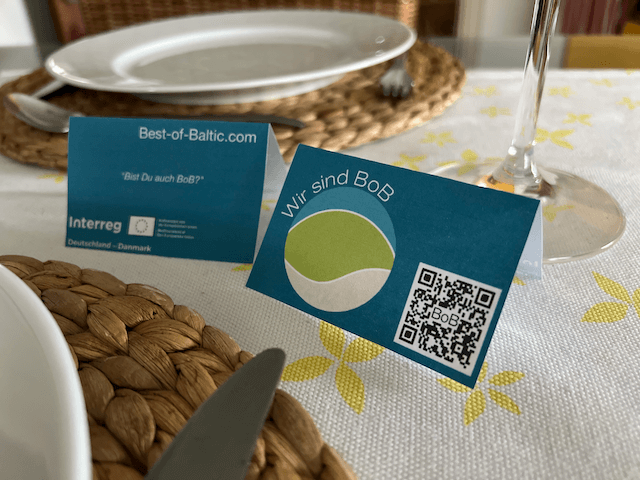
We are BoB

We are BoB

Welcome, Sankt Elisabeth Krankenhaus Eutin GmbH!
Great, you are Best of Baltic, your score is
61
For 2026 the minimum score is
27
In 2027 the minimum score will be
42
Sankt Elisabeth Krankenhaus Eutin (SEK Eutin) ist ein Fachkrankenhaus für Innere Medizin mit den Schwerpunkten Geriatrie und Palliativmedizin. Es verfügt über rund 160 Betten, beschäftigt mehr als 250 Mitarbeiter und gehört zum katholischen Elisabeth Vinzenz Verbund. Die Klinik ist Akademisches Lehrkrankenhaus der Universität zu Lübeck und betreibt eines der größten Palliativzentren in Deutschland sowie eine spezialisierte Station zur Behandlung von Menschen mit einer Demenzerkrankung und / oder einem Delir. Das SEK Eutin gehört im Fachbereich Geriatrie zu den bundesweit fünf größten Einrichtungen und arbeitet eng mit umliegenden Kliniken (z.B. auch als zertifiziertes Alterstraumatologisches Zentrum mit der Schön Klinik Neustadt) sowie weiteren Kooperationspartnern in der Region (z.B. spezialisierte ambulante Palliativversorgung SAPV, Kompetenzzentrum Demenz Schleswig-Holstein) zusammen.
Die teilstationäre Behandlung in der geriatrischen Tagesklinik mit 20 Plätzen und weitere Angebote, wie u.a. das der „Familialen Pflege“, runden das Leistungsspektrum des SEK Eutin ab.
Energy
Switching to a ‘real’ green electricity provider
2
(0) no special tariff, (1) eco from the conventional provider, (2) eco from the local provider (3) with a pure green electricity provider
(0) no special tariff, (1) eco from the conventional provider, (2) eco from the local provider (3) with a pure green electricity provider
Your country has most likely real green electricity providers, as they purchase or implement the appropriate capacities of green electricity for each customer. The other electricity providers only offer an electricity mix. The share of green electricity is sold more expensively as an eco-tariff to some customers, while the other customers theoretically only receive the shares of gas, coal, etc.
http://www.imodeler.info/ro?key=CF8Gsu47BnYHLi5NHUWXKVA
0.44
LED lamps
2
(0) none at all, (1) older energy-saving lamps, (2) argely LED, (3) complete LED lighting
(0) none at all, (1) older energy-saving lamps, (2) argely LED, (3) complete LED lighting
LED 'light bulbs' are now available for really all lamps, even with pleasantly warm light colors. Also, think about the lights outside - are they LED as well?
0.23
PV on suitable places
3
(0) not at all, (1) less than 50%, (2) more than 50%, (3) all suitable areas
(0) not at all, (1) less than 50%, (2) more than 50%, (3) all suitable areas
We have to use all suitable areas for photovoltaics (PV), as the variants on open spaces restrict nature and agriculture. A trend is PV on stilts (Agri-PV), so that it can still be gardened or cultivated underneath. But that costs building material. Photovoltaics has become amazingly inexpensive today thanks to cheap panels from China. Unfortunately, there is hardly any money to make from the feed into the power grid, currently about 8 cents per kWh in Germany. Therefore, PV should always be combined with its own electricity storage (own step, see below) so that as much electricity as possible is consumed by yourself. This then saves approx. 25 to 35 cents per kWh (depending on your tariff), which we would otherwise have to pay to the electricity provider. In this way, your own PV system, adapted to your own electricity consumption, pays off after just a few years. If you have a car, you should take into account its consumption (even if it is not yet an electric car). Then the savings are much bigger. The banks like to give loans for PV, quite often it is also being subsidized. In addition, there are also providers who take over the costs and virtually rent the roof area and offer discounted electricity in return. Such providers then form so-called virtual power plants with other houses and their batteries. For such a dependency, you should inform yourself well about what is best for you.
1.10
Motion detector
2
(0) none, (1) less than half, (2) more than half, (3) everywhere
(0) none, (1) less than half, (2) more than half, (3) everywhere
Motion detectors make sense in all rooms including outdoor areas, where we potentially let the light burn for too long, for example in the hallway, basement, garage, etc. Of course, it is important that the light does not stay on for too long.
0.16
Avoidance of stand-by times
1
(0) not at all, (1) for some devices, (2) for most, (3) for all
(0) not at all, (1) for some devices, (2) for most, (3) for all
Standby power consumption is often reminded and extrapolated. For example, if a screen consumes 5 watts in standby, that is 120 watt hours (Wh) per day, i.e. about one eighth of a kilowatt hour (35 cents/kWh). Companies can quite easily calculate for themselves what savings potential all their computers, screens, beamers and even routers have if they do not use StandBy.
0.16
Let the light burn unnecessarily
2
(0) happens constantly, (1) happens frequently, (2) happens rarely, (3) never happens
(0) happens constantly, (1) happens frequently, (2) happens rarely, (3) never happens
Modern lamps require little electricity, and yet it is worthwhile not to let them burn unnecessarily, for example when we are not in the room for a long time. Corridors, toilet rooms, cellars often have the light burning unnecessarily. In some indoor and outdoor areas, companies also sometimes have the light on too long or too early.
0.08
Housing, Buildings
Waiver of air conditioning
2
(0) not at all, (1) less than 50%, (2) more than 50%, (3) 100% of the rooms
(0) not at all, (1) less than 50%, (2) more than 50%, (3) 100% of the rooms
Air conditioning systems are also gaining in importance in temperate latitudes. Intelligent construction and ventilation and the use of thermal protection roller blinds can avoid these power guzzlers.
In warm regions, a corresponding education of the guests can take place. Often a fan is also useful.
0.39
Intelligent ventilation
2
(0) not at all, (1) less than 50%, (2) more than 50%, (3) 100% of the times in the heating season
(0) not at all, (1) less than 50%, (2) more than 50%, (3) 100% of the times in the heating season
Intelligent ventilation does not mean too late and not too long. It is too late when we get tired when the air is used up, get a headache and the humidity becomes too high. It is too long when the air has already been replaced and is cool, but we also ventilate the materials (walls, furniture) even longer.
Heat ultimately means that things or air vibrate. When the air is exchanged, but the objects and walls are still vibrating, the fresh air is quickly heated. Even if the walls get cold, mold can form on them and we need expensive heating energy to make everything vibrate again.
By the way, CO2 measuring devices help to ventilate in time and not for too long. However, these should not be a useless gadget, but perhaps used for practice one after the other in the rooms and gladly lent. A nice game is the competition, how good the sense of the people in the room is to ventilate in time and not too long.
Companies in particular have the potential to keep the doors in the entrance area not too far and not too long open.
0.23
Mobility
Charging stations for electric cars
2
(0) not at all, (1) less than 50%, (2) more than 50%, (3) for all guests/employees
(0) not at all, (1) less than 50%, (2) more than 50%, (3) for all guests/employees
If you do not have a garage or courtyard entrance with your own socket, you are dependent on charging options in public space and at the workplace. However, the charging options, which were initially underutilized, must first be there, but then people switch to electric cars with a time delay. Providing guests and employees with enough charging stations here is a real competitive advantage.
2.60
Bicycle shelters
3
(0) not at all, (1) for less than 50%, (2) for more than 50%, (3) all can store their bicycles
(0) not at all, (1) for less than 50%, (2) for more than 50%, (3) all can store their bicycles
What has recently been a successful model in some countries and cities is still a problem in Germany: to give cyclists priority over car traffic. The willingness to ride a bike, even in bad weather, is higher than ever. E-cargo bicycles make it possible to at least do without the second car. A company can do a lot from the bicycle shelter with charging possibility via the company bicycle.
0.41
Carpooling
1
(0) always drive individually, (1) every now and then, (2) mostly, (3) basically, if possible, driving with others
(0) always drive individually, (1) every now and then, (2) mostly, (3) basically, if possible, driving with others
Many routes and times are not served by public transport. It is often worthwhile to drive in the car together with others. Even if the car is left at home and the times have to be adjusted, it can make us proud to do the right thing with a view to a better world.
In addition to carpooling in the circle of acquaintances, there are also portals that organize carpooling - often also for longer trips. As an employer, the municipalities can organize something for their employees here.
0.39
Garbage
Buy unpacked or refills
1
(0) never, (1) sometimes, (2) mostly, (3) always
(0) never, (1) sometimes, (2) mostly, (3) always
We are used to the fact that everything is packed and we don't care much about the packaging. For some foods, the packaging is more expensive in the production than the content. Paying attention to the packaging sends a signal to manufacturers and retailers. Refills are an option as well.
For food, there are so-called unpackaged shops or at least the possibility of using deposit containers (own step) or cotton bags brought along for loose vegetables and fruit. To fill up the pantry or to cater for events, attention should therefore be paid to the packaging.
Office supplies can be delivered unpacked in deposit boxes (e.g. from Memo).
0.65
Separate garbage consistently
1
(0) not at all, (1) some, (2) mostly, (3) always, even on the go
(0) not at all, (1) some, (2) mostly, (3) always, even on the go
Consistently separating waste, including green waste, glass and paper, is not as self-evident as can be assumed. Many make little effort here and don't really know what belongs in which bin. The residual waste bin also costs the public sector a lot of money, while the recyclable and green waste bin are free of charge. But also special waste, such as batteries, incandescent lamps, electrical appliances, etc. must be disposed of properly.
0.65
Recycling-Paper
3
(0) never, (1) some, (2) mostly, (3) always
(0) never, (1) some, (2) mostly, (3) always
Non-recycled paper is often cheaper, but means cutting of forests, contamination of water during production and a high energy requirement.
Recycled paper for toilet paper, writing paper, packaging, envelopes, wrapping paper, etc. should be a matter of course today. But we have to pay attention to it and choose it.
Recycled paper is also snow-white, but it should then not be bleached with chlorine but oxygen.
1.23
Paperless office/media
1
(0) not at all, (1) some, (2) most, (3) all only digital.
(0) not at all, (1) some, (2) most, (3) all only digital.
Saving paper helps to protect forests - recycling paper also ultimately means more demand for fresh pulp from trees.
We don't even need to print many things in the first place, but can save them on devices that we already have. For internal processes but also for dialogue with customers, digital forms should continue to prevail.
0.61
Compost toilet
0
(0) not at all, (1) sometimes, (2) often, (3) always
(0) not at all, (1) sometimes, (2) often, (3) always
Compost toilets are quite controversial - not only because of the proximity to their own faeces, but also because of hygiene, germs, or drug residues.
On the other hand, we can no longer give finite artificial fertilizer to the fields and at best collect a little of the nutrients through the sewage treatment plant in order to lead the rest into the seas at the end or to burn the sewage sludge.
Compost toilets with microorganisms can ferment faeces and return the nutrients and organic material in cycles of agriculture and the garden. Public compost toilets and also sustainable festivals follow this approach. In terms of approval in the gray area, really comfortable compost toilets are also possible in houses.
Odor formation occurs only through the urine. Therefore, compost toilets separate it from the faeces (hence the name separating toilet). Urine is a great fertilizer - we only have to dilute it and of course only apply it to the plants when they also grow. Otherwise, the nitrates will end up in the groundwater with the rain.
0.53
Reusable in canteen and kiosk
2
(0) not at all, (1) some, (2) mostly, (3) always
(0) not at all, (1) some, (2) mostly, (3) always
After unpacked and for drinks after the tap water, the best thing we can do is to buy our food in reusable containers. (By the way, there are also reusable shipping boxes for office supplies as well as some regional delivery services). Also ask whether the containers are transported empty throughout Germany, or whether North German beer flows into the empty bottle of Bavarian beer and vice versa. Next question, what energy does it cost to clean the containers. Composite packaging or cans that are easy to recycle are the better alternative in some studies. In such studies, it is necessary to look closely at what is being compared. Ultimately, it is important to close regional cycles.
Next question, whether the containers should be made of glass or plastic - glass is recycled more often, plastic is lighter and means less energy during transport.
0.81
Flea markets, repair cafes, classified ads instead of throwing away
0
(0) not at all, (1) sometimes, (2) mostly, (3) always
(0) not at all, (1) sometimes, (2) mostly, (3) always
Many things are actually thrown away, although others could still do something with it. It is more convenient for us not to repair it than to have a stand at the flea market or to have to send it for little money. But the good feeling of doing the right thing motivates. A company can avoid garbage here - even if throwing it away probably meant little effort.
0.24
Garbage collection campaigns
0
(0) not at all, (1) some, (2) many, (3) systematically throughout the year
(0) not at all, (1) some, (2) many, (3) systematically throughout the year
Garbage collection as an event also for the clubs with subsequent meeting, possibly sponsored by the local economy, helps to get nature clean and to raise awareness. Companies can sponsor or participate as a team.
0.08
Land use
Avoidance of surface sealing
3
(0) no consideration, (1) some waiver, (2) a lot of waiver, (3) maximum possible waiver
(0) no consideration, (1) some waiver, (2) a lot of waiver, (3) maximum possible waiver
Surface sealing is a problem not only in growing civilizations, but also in Germany. We live on too much living space, are still building new streets and courtyard driveways and our terraces are also getting bigger and bigger.
To specifically dispense with area, to build in height, water-permeable paving, green roofs (own point) and, weighing up all the advantages and disadvantages, to expand one's own house to the height in order to enable more people to live on the same sealed area, are valuable steps. By the way, an English lawn is ecologically not very valuable, for example, compared to a flower or clover meadow or a vegetable garden.
Companies can systematically look at which areas do not have to be sealed and perhaps can be provided with flower meadows.
0.83
Insect hotels, birdhouses, field mouse boxes, ...
3
(0) not at all, (1) some, (2) many, (3) maximum
(0) not at all, (1) some, (2) many, (3) maximum
Insect hotels or just old, higher tree stumps and dead wood on the ground, nesting boxes and, if useful, bat boxes are great ways to maximize biodiversity in your own environment. School classes can also participate here.
0.48
Bird feeding in winter
2
(0) not at all, (1) sometimes, (2) often, (3) basically
(0) not at all, (1) sometimes, (2) often, (3) basically
In the past, it was considered controversial whether birds should be fed, or whether they forget to find food themselves and instead promote the concentration of many birds in one place diseases. Today it is clear that with our well-kept gardens, leaf vacuum cleaners and perfect combine harvesters, we leave too little for the birds and they have to be fed. Many argue that we should even feed them in the summer.
0.32
Insect-friendly flowering plants
3
(0) not at all, (1) in some places, (2) in many places, (3) in all places and possibly also on the go
(0) not at all, (1) in some places, (2) in many places, (3) in all places and possibly also on the go
It is hard to believe that the future of our diet depends on the use of pesticides and their influence on insects that have to pollinate our plants. Many pollinators are threatened with extinction and in addition to the purchase of organic, we can offer these insects flowers on our areas. In fact, some plants are neither bee-nor bird-friendly. On the other hand, fruit trees and most vegetables are already great opportunities to promote bees, bumblebees, etc. At the flower meadows there are one- and multi-year-olds.
0.64
Organic vegetable and fruit cultivation
0
(0) not at all, (1) some, (2) much, (3) maximum
(0) not at all, (1) some, (2) much, (3) maximum
Do we harm the regional organic farmers when crops, such as orchards, grow on public land?
No, because hardly anyone will be able to take care of it themselves. Rather, the main problem is the use of land. English lawns, ornamental plants, weed destruction, etc. harm the soil and biodiversity. Instead, nature-friendly crops are needed.
If a company shies away from the maintenance effort, permaculture and the cultivation of perennial plants may make sense. Also, the cooperation with beekeepers and school classes, the possibility of public gardening and sponsorships are great measures for a better world.
Urban gardening is also popular when companies have raised beds on their roofs and offer employees something to relax and have a bite.
1.56
Green roof
2
(0) not at all, (1) partially, (2) predominantly, (3) on all suitable surfaces
(0) not at all, (1) partially, (2) predominantly, (3) on all suitable surfaces
Green roofs, at least for garages and shelters, are a good attempt to do something against the surface sealing and the extinction of species. If the areas are oriented towards the sun - to the east, west or south - it can of course also be occupied with PV modules. For flat roofs, the PV modules can be set up and then still grow a little under them. There are also bifacial solar modules that allow light to pass through or also generate energy with the scattered light from the back (although of course a green area does not illuminate the backs as much as a bright tin roof).
0.08
Waiver of weed killers
3
(0) not at all, (1) less than 50%, (2) more than 50%, (3) always
(0) not at all, (1) less than 50%, (2) more than 50%, (3) always
Sidewalks can be kept mechanically or by flames weed-free or the herb can also grow sometimes. The beds can be kept mechanically herb-free or laid out from the outset in such a way that herb does not matter. Pesticides are one of the main causes of species extinction and water pollution.
0.24
Social
Crafts from the region
3
(0) not at all, (1) sometimes, (2) mostly, (3) always
(0) not at all, (1) sometimes, (2) mostly, (3) always
This is about living and working in the region, about strengthening the community. The birdhouse from a social workshop or the PV system from the electrician on site (if he has further training). The award criteria of the municipalities must of course be legally secure.
If the work is good, a discreet advertising sign can also draw attention to the craft business in return.
1.06
Fair wages
3
(0) I don't care at all, (1) partially pay attention to it, (2) get involved, (3) always pay attention to it
(0) I don't care at all, (1) partially pay attention to it, (2) get involved, (3) always pay attention to it
Many people who earn above average can only do this because others earn below average. The gap between rich and poor is getting bigger and bigger. Consumers complain about cheap wages, but the price increase by 50 cents is rarely accepted.
What we deserve is not, as liberals or neoliberals like to think, just a question of diligence. It is the product (!) Out of diligence, skill and the right framework conditions. Anyone who knows many talented and hard-working people who are simply not lucky develops empathy and is willing to pay more, even if it is through tips.
Companies can set an example in the case of remuneration, in particular for less well-paid activities within the scope of their possibilities.
0.74
Volunteering
2
(0) not at all, (1) sometimes, (2) much, (3) maximum
(0) not at all, (1) sometimes, (2) much, (3) maximum
Volunteering, whether at the fire brigade, in the sports club or the help in the neighborhood, is enormously important for togetherness and society. Companies can help here to honor volunteering and accompany it through donations.
0.74
Refugee care
2
(0) not at all, (1) promote some, (2) promote a lot, (3) maximum each measured by what is basically conceivable.
(0) not at all, (1) promote some, (2) promote a lot, (3) maximum each measured by what is basically conceivable.
Societies must take in refugees - no matter how many there are. To be distinguished from this is the number of those who we can also permanently integrate into our society and also have to with regard to our economy and retirement provision or demographic change. A company should actively anticipate and help to accept people with a migration background within the scope of the legal possibilities. Linguistically, English is sometimes the lowest common denominator that can also be chosen in companies. As far as it is legal, we should help these people.
1.44
Governance
Diversity, Equality, Inclusion
3
(0) no issue, or we balance male and female staff; we also include different nationalities; we also include disabled persons - (1) one of it; (2) two of it (3) all three of it
(0) no issue, or we balance male and female staff; we also include different nationalities; we also include disabled persons - (1) one of it; (2) two of it (3) all three of it
Not just the EU is looking at ESG criteria - Ecological, Social and Governance (ESG) in companies. The governance covers not just diversity, equality and inclusion (DIE), but also risk management, transparency, and a lot more. We make DIE a part of BoB - the rest is rather a topic of a company's strategy for more sucess. Sometimes companies only have the opportunity to address one of the DEI's topics. If you do address all three you get three points!
1.00
Transparency, participation
0
(0) no issue, or transparent strategy; we let the employees participate in the development; we let the employees own parts of the company (1) one of it; (2) two of it (3) all three of it
(0) no issue, or transparent strategy; we let the employees participate in the development; we let the employees own parts of the company (1) one of it; (2) two of it (3) all three of it
Part of the governance criteria are the possibilities of employees to be part of the company and its decisions, to co-own parts of the company and to have transparent strategies.
2.00