
We are BoB

We are BoB

Welcome, Konrad Zinke !
Your score is
16
For 2026 the minimum score is
27
In 2027 the minimum score will be
42
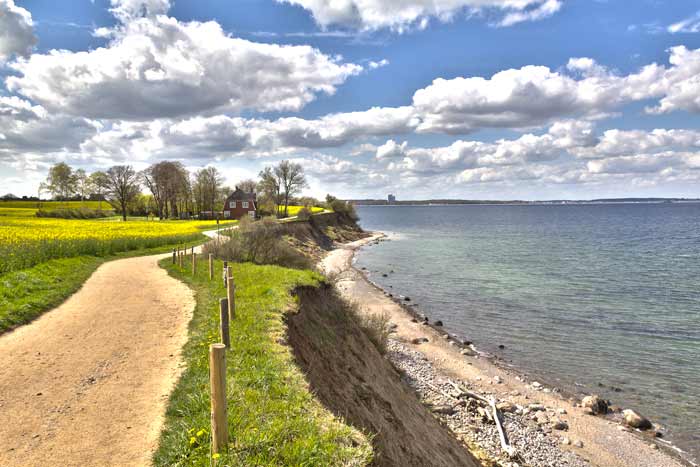
Der Ostsee-Garten ist eine Arbeitsgruppe vom NABU Ostholstein-Süd. Wir engagieren uns für unsere Küste, das Meer, Flora und Fauna in der Umgebung. Unsere Kleine Gruppe trifft sich regelmäßig jeden Monat, Aktionen zu planen, neue Ziele zu finden. Regelmäßig veranstalten wir Vorträge in der Gemeinde wie z.B.: Fische in der Ostsee- Was alles so unter Wasser zu sehen ist , Knicks in SH - schön und nützlich, Ostsee - ein Notfallpatient?, Führungen in der Aalbeckniederung...
Energy
LED lamps
0
(0) none at all, (1) older energy-saving lamps, (2) argely LED, (3) complete LED lighting
(0) none at all, (1) older energy-saving lamps, (2) argely LED, (3) complete LED lighting
LED 'light bulbs' are now available for really all lamps, even with pleasantly warm light colors. Also, think about the lights outside - are they LED as well?
0.23
Let the light burn unnecessarily
0
(0) happens constantly, (1) happens frequently, (2) happens rarely, (3) never happens
(0) happens constantly, (1) happens frequently, (2) happens rarely, (3) never happens
Modern lamps require little electricity, and yet it is worthwhile not to let them burn unnecessarily, for example when we are not in the room for a long time. Corridors, toilet rooms, cellars often have the light burning unnecessarily. In some indoor and outdoor areas, companies also sometimes have the light on too long or too early.
0.08
Housing, Buildings
Intelligent ventilation
0
(0) not at all, (1) less than 50%, (2) more than 50%, (3) 100% of the times in the heating season
(0) not at all, (1) less than 50%, (2) more than 50%, (3) 100% of the times in the heating season
Intelligent ventilation does not mean too late and not too long. It is too late when we get tired when the air is used up, get a headache and the humidity becomes too high. It is too long when the air has already been replaced and is cool, but we also ventilate the materials (walls, furniture) even longer.
Heat ultimately means that things or air vibrate. When the air is exchanged, but the objects and walls are still vibrating, the fresh air is quickly heated. Even if the walls get cold, mold can form on them and we need expensive heating energy to make everything vibrate again.
By the way, CO2 measuring devices help to ventilate in time and not for too long. However, these should not be a useless gadget, but perhaps used for practice one after the other in the rooms and gladly lent. A nice game is the competition, how good the sense of the people in the room is to ventilate in time and not too long.
Companies in particular have the potential to keep the doors in the entrance area not too far and not too long open.
0.23
Nutrition
Vegan days
3
(0) none per week, (1) 1-3, (2) 4-6, (3) 7 days a week
(0) none per week, (1) 1-3, (2) 4-6, (3) 7 days a week
Vegan means refraining from fish, meat, milk, cheese and other animal foods. Unthinkable for many people, on the one hand because of the taste, and on the other hand because they consider it unhealthy.
To the taste, it can be said: Among the extremely diverse vegan alternatives, something certainly tastes just as good or even better. We just have to try it - from vegan cheese to egg salad to burgers. Many celebrities and athletes are vegan. Vegan is booming.
Regarding health, it must be said: Our early ancestors ate healthier than we eat today. There was mixed food with only little meat and fish and also little grain and instead more legumes. If you eat a vegan diet, you have to pay attention to two nutrients: vitamin B12 and unsaturated omega 3 fatty acids. B12 can be bought for sucking (or as an additive in foods that are no longer called organic). Omega 3 fatty acids are available in linseed and algae oil. After a few months vegan, a blood test can show whether there are deficiency symptoms. As a rule, vegans eat healthier and are fitter than others.
What else does it bring: In addition to ethical reasons (keeping and killing animals), vegans help to prevent the deforestation of forests, because most areas in the world need the feed. In fact, we will not be able to feed the growing world population in the way we Germans. Vegans also prevent greenhouse gases from the methane emissions of cows, save enormous amounts of drinking water and prevent the pollution of soils, groundwater and waters.
4.44
Food from the region
0
(0) not at all, (1) less than 50%, (2) more than 50%, (3) 100% of food
(0) not at all, (1) less than 50%, (2) more than 50%, (3) 100% of food
Food from the region, from the weekly market and from the farm shop have not been transported far (there are of course also exceptions there) and strengthen the local economy.
However, there are also inefficient short transport routes when vehicles with little load drive to the points of sale. E-mobility and cargo bikes can help here.
Unfortunately, the regional is often also played out against the organic offer: regional, sprayed with pesticides food is not as good as regional organic food, and regional meat is not as good for the environment as the renunciation of meat.
0.23
Legumes
0
(0) not at all, (1) less than 50%, (2) more than 50%, (3) 100% of the otherwise mostly cereal products
(0) not at all, (1) less than 50%, (2) more than 50%, (3) 100% of the otherwise mostly cereal products
Legumes are not only an alternative source of vegetable proter to animal products, but also extremely important for world nutrition. They bind nitrogen from the air in the soil and can achieve just as high yields in organic farming as in industrial agriculture. So we have to cut down fewer forests.
In addition, legumes are healthier than cereals. Harari describes in Sapiens how we could probably get much older if we didn't eat so much cereal products.
After all, legumes are important for bees and biodiversity. Lupine, for example, also grows in northern Germany and can be used for meat substitutes, yogurt, coffee substitutes, ice cream or even noodles.
0.42
Tap water
0
(0) not at all, (1) less than 50%, (2) more than 50%, (3) 100% instead of purchased mineral water or soft drinks
(0) not at all, (1) less than 50%, (2) more than 50%, (3) 100% instead of purchased mineral water or soft drinks
Fortunately, tap water has long been a trend. There are drinking water dispensers in schools and the students have their drinking bottles with them, and managers also bring their drinking bottles to workshops. Many children do not even get used to the unhealthy sugar drinks.
Tap water is more strictly controlled than bottled drinks and saves a lot of energy and packaging.
Companies can set up water dispensers - if necessary also work with filters, for example to remove chlorine odors.
1.30
Avoidance of food waste
0
(0) not at all, (1) less than 50%, (2) more than 50%, (3) I save or avoid 100% of the food to be thrown away
(0) not at all, (1) less than 50%, (2) more than 50%, (3) I save or avoid 100% of the food to be thrown away
Food is wasted from the field to the factories and transport routes to the throw away by us, the restaurants and the supermarkets. This ultimately means that more areas are needed for cultivation and thus forests are cut down and biodiversity is endangered with sprays and fertilizers.
We can shop more specifically, throw away goods not only because of the best before date, save food in the household (e.g. freeze bananas or make durable spreads and soups from leftover vegetables yourself), save specifically rescued food (e.g. too small or wrinkled goods) and also donate leftover food in many places, e.g. to the food banks.
Canteens and kiosks and also events can query the demand in advance and thus prevent food from being thrown away. A dish can also be deliberately offered the next day, which advertises the utilization of the leftovers from the previous day.
0.83
Mobility
Renunciation of own car/motorcycle
2
(0) none, (1) less than half, (2) at least half, (3) all those who have a driver's license waive
(0) none, (1) less than half, (2) at least half, (3) all those who have a driver's license waive
Despite the claim to do without your own company car or to share cars in the pool with others, allows you to save a lot of money and is good for a better world.
2.33
User of public transport
0
(0) no use of public transport, (1) less than half of the routes and times with public transport, (2) more than half, (3) all routes and times
(0) no use of public transport, (1) less than half of the routes and times with public transport, (2) more than half, (3) all routes and times
Local public transport and also long-distance transport by train and bus (in the case of bus, the road infrastructure is still required) means considerably less energy and resource requirements than individual transport with cars or motorcycles.
Long-distance buses only perform so well because they are limited to well-used routes, while the train also runs at unfavorable times and has to connect remote places, which then leads to less than half-full trains.
Companies can carry out business trips with public transport and encourage or even promote customers and employees in the use of public transport.
0.39
Waiver of air travel
0
(0) more than one per year, (1) one per year, (2) one every few years, (3) none or less often than every 5 years
(0) more than one per year, (1) one per year, (2) one every few years, (3) none or less often than every 5 years
Flying is a great experience for most people like experiencing distant places. Flying short distances should rightly lead to 'flight shame' - some countries are planning to ban domestic flights completely.
The problem with flying is, on the one hand, that we travel a lot of kilometers, even if the energy requirement per kilometer and person is not so high. On the other hand, greenhouse gases are transported directly to the heights where they harm us.
So we should only use the plane for rare long-distance trips and then rather stay longer in the places. Many, on the other hand, fly several times a year, partly within Europe - some even to sustainability conferences or just to spontaneously escape the harsh weather in Germany. Unfortunately, flying is even subsidized and is often cheaper than train or car.
0.83
Bicycle instead of car
0
(0) not at all, (1) less than 50%, (2) more than 50%, (3) always
(0) not at all, (1) less than 50%, (2) more than 50%, (3) always
No question - leaving the car and taking the bike is a proud feeling and healthy. If you don't want to exhaust yourself - for example on the way to work, you can consider an e-bike. If you have a lot to transport, a cargo bike. Often we can also share a cargo bike with others. And if you shy away from bad weather, you will find great cycling clothing today, which completely refutes the argument. Here, companies can promote their employees.
0.55
Clothes
Organic cotton/ linen/ hemp/ wood fiber/ certified virgin wool
2
(0) not at all, (1) some, (2) many things, (3) everything
(0) not at all, (1) some, (2) many things, (3) everything
Globally, conventional cotton is an environmental problem due to the use of sprays and the high water consumption. In addition, the textile factories poison entire rivers and exploit people during conventional dyeing.
In addition to ecological cotton, there are other natural fibers with sometimes much less damage to the environment.
In the case of virgin wool, attention must be paid to the certification, which excludes animal suffering.
By the way, there is now also outdoor clothing made of densely woven organic cotton as an alternative to the plastic fibers. Plastic fibers always allow microplastics to enter the wastewater during washing and microplastics in the environment may lead to multi-resistant super germs - a long history.
With the points for clothing, if you do not buy conventional cotton, but sometimes choose recycled and sometimes organic cotton, you can give a full 3 points for both.
By the way, organic is also possible with curtains, tablecloths and bed linen!!!
1.69
Renunciation of leather
0
(0) not at all, (1) sometimes, (2) often, (3) basically
(0) not at all, (1) sometimes, (2) often, (3) basically
This is about workwear or, for example, in the tourism sector clothing with advertising. Vegan shoes and belts are no longer distinguishable from their leather variants. And who pays attention to the fact that the tanning processes do not allow heavy metals to enter the environment or that the leather is certified accordingly?
We should be careful with some plastics, such as PVC with plasticizers, which are also not good for the environment.
0.59
Other Consumption
Used, long-used devices
0
(0) not at all, (1) sometimes, (2) often, (3) basically
(0) not at all, (1) sometimes, (2) often, (3) basically
Many devices from vacuum cleaners to cordless screwdrivers to TVs are amazingly inexpensive today. Relying on valuable devices that last a long time, or even buying used devices, helps to save raw materials and energy.
1.30