We are BoB

We are BoB

Welcome, Waldbaden & Naturcoaching in Lübeck/Schleswig-Holstein/überall!
Great, you are Best of Baltic, your score is
63
For 2026 the minimum score is
27
In 2027 the minimum score will be
42

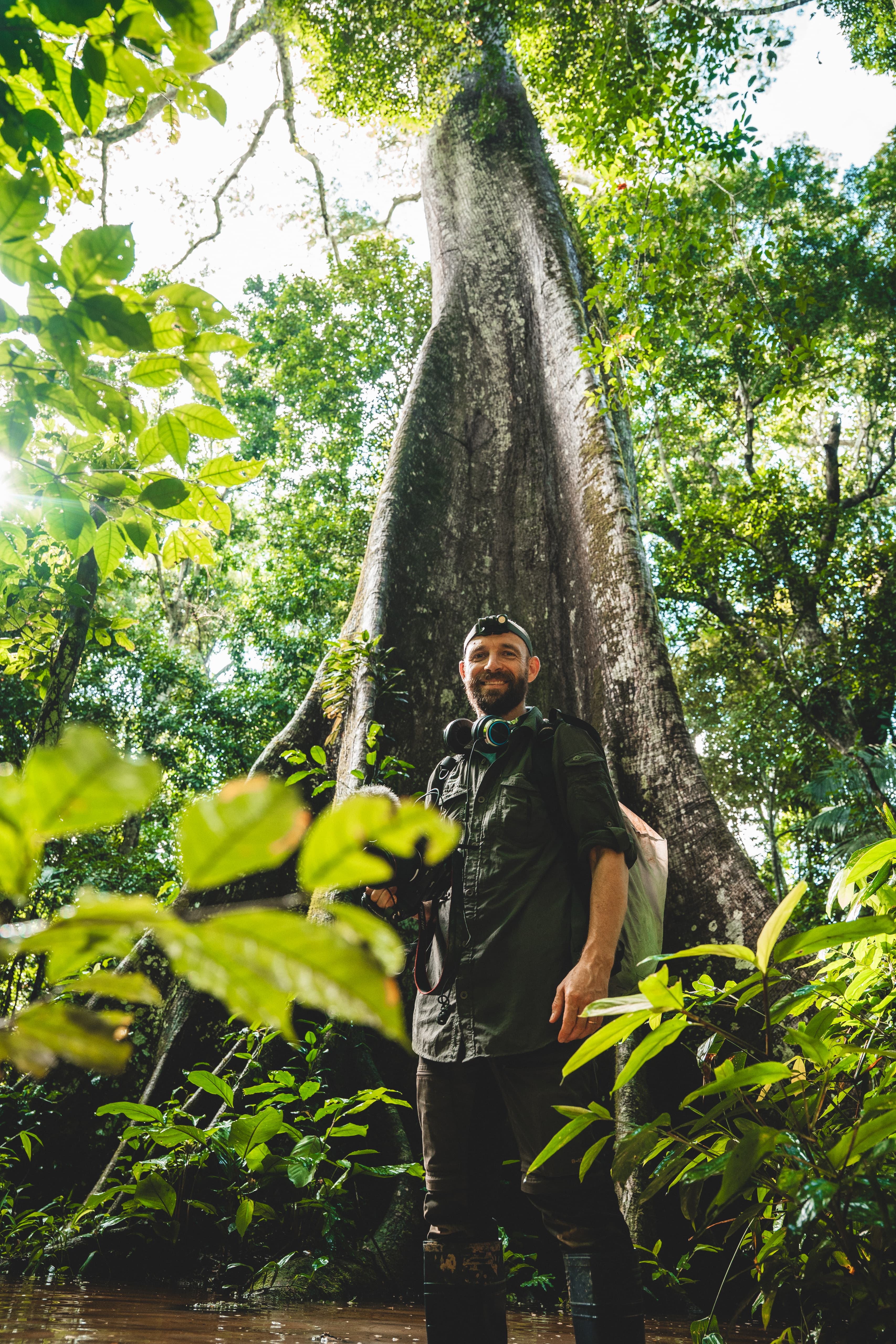
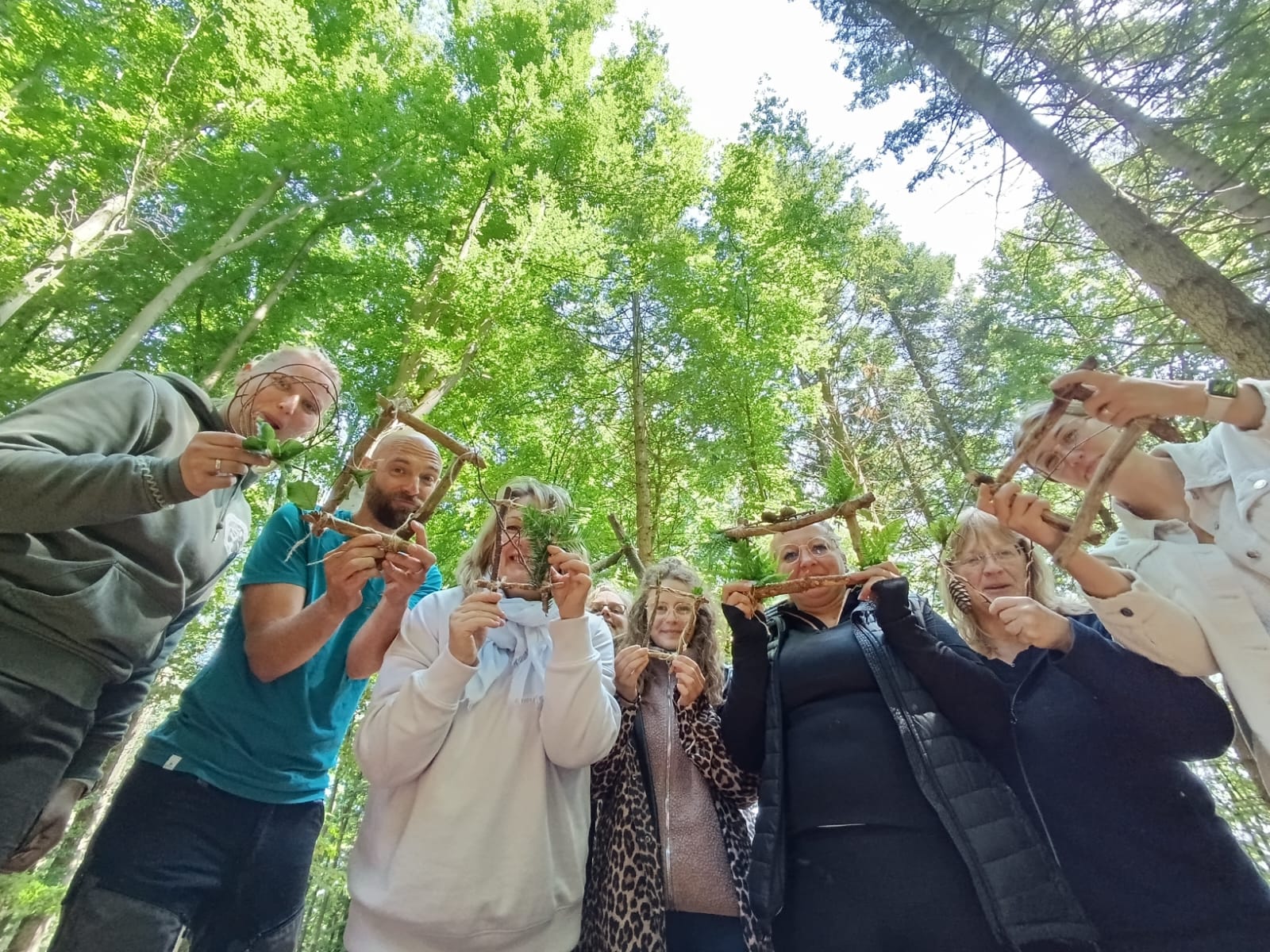
Raus aus dem Kopf, rein in den Wald! 🌲 Als BaumBuddy nehme ich dich mit auf eine kleine Auszeit vom Alltag – zum Durchatmen, Entschleunigen und Staunen. Beim Waldbaden lassen wir den Stress einfach mal zwischen den Bäumen hängen, entdecken die Natur mit allen Sinnen und müssen ausnahmsweise mal gar nichts leisten. Und wenn im Kopf das Gedankenkarussell mal wieder Überstunden macht, hilft ein Perspektivwechsel im Grünen oft mehr als noch eine Runde Grübeln. Ich finde: Wir verbringen viel zu wenig Zeit zwischen Bäumen und viel zu viel Zeit zwischen To-do-Listen. Das möchte ich ändern – mit viel Herz, einer Prise Humor und jeder Menge Waldliebe. 🌿
Bis bald im Wald
Sebastian
Nutrition
Vegan days
1
(0) none per week, (1) 1-3, (2) 4-6, (3) 7 days a week
(0) none per week, (1) 1-3, (2) 4-6, (3) 7 days a week
Vegan means refraining from fish, meat, milk, cheese and other animal foods. Unthinkable for many people, on the one hand because of the taste, and on the other hand because they consider it unhealthy.
To the taste, it can be said: Among the extremely diverse vegan alternatives, something certainly tastes just as good or even better. We just have to try it - from vegan cheese to egg salad to burgers. Many celebrities and athletes are vegan. Vegan is booming.
Regarding health, it must be said: Our early ancestors ate healthier than we eat today. There was mixed food with only little meat and fish and also little grain and instead more legumes. If you eat a vegan diet, you have to pay attention to two nutrients: vitamin B12 and unsaturated omega 3 fatty acids. B12 can be bought for sucking (or as an additive in foods that are no longer called organic). Omega 3 fatty acids are available in linseed and algae oil. After a few months vegan, a blood test can show whether there are deficiency symptoms. As a rule, vegans eat healthier and are fitter than others.
What else does it bring: In addition to ethical reasons (keeping and killing animals), vegans help to prevent the deforestation of forests, because most areas in the world need the feed. In fact, we will not be able to feed the growing world population in the way we Germans. Vegans also prevent greenhouse gases from the methane emissions of cows, save enormous amounts of drinking water and prevent the pollution of soils, groundwater and waters.
4.44
Vegetarian days
2
(0) none per week, (1) 1-3, (2) 4-6, (3) 7 days a week
(0) none per week, (1) 1-3, (2) 4-6, (3) 7 days a week
Unlike the vegan diet, a vegetarian diet can also include milk, cheese or eggs. Vegetarian days are healthy, mean less animal husbandry and thus less consumption of land and water.
People in the industrialized world consume more than three times more animal products, which according to the EAT-Lancet Commission would be healthy for us and the planet. We don't have to become vegans or vegetarians right away, but maybe just flexitarians.
3.01
Food from the region
1
(0) not at all, (1) less than 50%, (2) more than 50%, (3) 100% of food
(0) not at all, (1) less than 50%, (2) more than 50%, (3) 100% of food
Food from the region, from the weekly market and from the farm shop have not been transported far (there are of course also exceptions there) and strengthen the local economy.
However, there are also inefficient short transport routes when vehicles with little load drive to the points of sale. E-mobility and cargo bikes can help here.
Unfortunately, the regional is often also played out against the organic offer: regional, sprayed with pesticides food is not as good as regional organic food, and regional meat is not as good for the environment as the renunciation of meat.
0.23
Organic from the region
1
(0) not at all, (1) less than 50%, (2) more than 50%, (3) 100% of the products also available as organic from the region
(0) not at all, (1) less than 50%, (2) more than 50%, (3) 100% of the products also available as organic from the region
Which is better - the organic apple from New Zealand or the sprayed apple from the region? Answer: both wrong. Organic food from the region means less transport and is therefore even better than organic food with wide transport.
Organic in the canteen or at the kiosk or at events is of course more expensive - but if it is not exemplified somewhere, what do we expect in the private sector. Sometimes a direct delivery from providers from the region is a way to save costs.
2.00
Organic from the region seasonal
1
(0) not at all, (1) less than 50%, (2) more than 50%, (3) 100% of the seasonal products also available as organic
(0) not at all, (1) less than 50%, (2) more than 50%, (3) 100% of the seasonal products also available as organic
Seasonal organic products in addition to regional organic products also have less energy expenditure for storage.
In the respective months, other products are available seasonally, so that we can eat healthy and tasty all year round with little transport and storage effort with regard to a seasonal calendar.
2.16
Tap water
3
(0) not at all, (1) less than 50%, (2) more than 50%, (3) 100% instead of purchased mineral water or soft drinks
(0) not at all, (1) less than 50%, (2) more than 50%, (3) 100% instead of purchased mineral water or soft drinks
Fortunately, tap water has long been a trend. There are drinking water dispensers in schools and the students have their drinking bottles with them, and managers also bring their drinking bottles to workshops. Many children do not even get used to the unhealthy sugar drinks.
Tap water is more strictly controlled than bottled drinks and saves a lot of energy and packaging.
Companies can set up water dispensers - if necessary also work with filters, for example to remove chlorine odors.
1.30
Avoidance of food waste
2
(0) not at all, (1) less than 50%, (2) more than 50%, (3) I save or avoid 100% of the food to be thrown away
(0) not at all, (1) less than 50%, (2) more than 50%, (3) I save or avoid 100% of the food to be thrown away
Food is wasted from the field to the factories and transport routes to the throw away by us, the restaurants and the supermarkets. This ultimately means that more areas are needed for cultivation and thus forests are cut down and biodiversity is endangered with sprays and fertilizers.
We can shop more specifically, throw away goods not only because of the best before date, save food in the household (e.g. freeze bananas or make durable spreads and soups from leftover vegetables yourself), save specifically rescued food (e.g. too small or wrinkled goods) and also donate leftover food in many places, e.g. to the food banks.
Canteens and kiosks and also events can query the demand in advance and thus prevent food from being thrown away. A dish can also be deliberately offered the next day, which advertises the utilization of the leftovers from the previous day.
0.83
Mobility
Bicycle instead of car
2
(0) not at all, (1) less than 50%, (2) more than 50%, (3) always
(0) not at all, (1) less than 50%, (2) more than 50%, (3) always
No question - leaving the car and taking the bike is a proud feeling and healthy. If you don't want to exhaust yourself - for example on the way to work, you can consider an e-bike. If you have a lot to transport, a cargo bike. Often we can also share a cargo bike with others. And if you shy away from bad weather, you will find great cycling clothing today, which completely refutes the argument. Here, companies can promote their employees.
0.55
Garbage
Paperless office/media
2
(0) not at all, (1) some, (2) most, (3) all only digital.
(0) not at all, (1) some, (2) most, (3) all only digital.
Saving paper helps to protect forests - recycling paper also ultimately means more demand for fresh pulp from trees.
We don't even need to print many things in the first place, but can save them on devices that we already have. For internal processes but also for dialogue with customers, digital forms should continue to prevail.
0.61
Finance, Insurance
Green investment
2
(0) not at all, (1) little, (2) mostly, (3) exclusively
(0) not at all, (1) little, (2) mostly, (3) exclusively
Actually, it is logical that green investments have to yield the most return - but to be fair, it must be said that at least in the short term, bad fluctuations also happen here. With the Ukraine attack by Russia, money was withdrawn from renewable energies and relocated to the old oil industry and weapons production. Due to homemade problems, e-mobility does not get going and suddenly the prices of lithium suppliers are swaying. (not every lithium supplier is sustainable)
On the other hand, investments in wind and solar parks or crowd financing of other sustainable projects, such as energy renovation, are solid.
Companies can also take sustainable criteria into account when investing as far as permissible or also accompany citizen energy projects.
3.20
Social
Volunteering
2
(0) not at all, (1) sometimes, (2) much, (3) maximum
(0) not at all, (1) sometimes, (2) much, (3) maximum
Volunteering, whether at the fire brigade, in the sports club or the help in the neighborhood, is enormously important for togetherness and society. Companies can help here to honor volunteering and accompany it through donations.
0.74
Nature experience opportunities
3
(0) not at all, (1) promote some, (2) promote a lot, (3) maximum each measured by what is basically conceivable.
(0) not at all, (1) promote some, (2) promote a lot, (3) maximum each measured by what is basically conceivable.
Educational trails, information boards, exhibitions, excursions, etc., if necessary also together with schools and nature conservation organizations.
0.07
Clothes
Organic cotton/ linen/ hemp/ wood fiber/ certified virgin wool
2
(0) not at all, (1) some, (2) many things, (3) everything
(0) not at all, (1) some, (2) many things, (3) everything
Globally, conventional cotton is an environmental problem due to the use of sprays and the high water consumption. In addition, the textile factories poison entire rivers and exploit people during conventional dyeing.
In addition to ecological cotton, there are other natural fibers with sometimes much less damage to the environment.
In the case of virgin wool, attention must be paid to the certification, which excludes animal suffering.
By the way, there is now also outdoor clothing made of densely woven organic cotton as an alternative to the plastic fibers. Plastic fibers always allow microplastics to enter the wastewater during washing and microplastics in the environment may lead to multi-resistant super germs - a long history.
With the points for clothing, if you do not buy conventional cotton, but sometimes choose recycled and sometimes organic cotton, you can give a full 3 points for both.
By the way, organic is also possible with curtains, tablecloths and bed linen!!!
1.69
Recycled cotton
2
(0) not at all, (1) some, (2) many things, (3) basically
(0) not at all, (1) some, (2) many things, (3) basically
This is about workwear or, for example, in the tourism sector clothing with advertising. Even large, conventional clothing stores sometimes take back old clothes and promise to produce new yarns from them. Often the problem is the quality of short-lived clothing, which is then difficult to recycle and yet ends up in the waste incineration plant or on the dump in developing countries.
1.61
Recycled synthetic fibers without toxic impregnation
2
(0) not at all, (1) some, (2) many things, (3) basically
(0) not at all, (1) some, (2) many things, (3) basically
This is about workwear or, for example, in the tourism sector clothing with advertising. In particular, the manufacturers of outdoor clothing now use recycled PET bottles for their yarns and they also do without the worst chemicals, such as PFCs. Nevertheless, the question is always whether we have to wear clothes that are designed for the Himalayas in everyday life. Because synthetic fibers also release microplastics from the plastic fleece sweater to the wastewater. Some use a washing bag that is supposed to collect these plastic fiber remains.
0.57
Renunciation of leather
2
(0) not at all, (1) sometimes, (2) often, (3) basically
(0) not at all, (1) sometimes, (2) often, (3) basically
This is about workwear or, for example, in the tourism sector clothing with advertising. Vegan shoes and belts are no longer distinguishable from their leather variants. And who pays attention to the fact that the tanning processes do not allow heavy metals to enter the environment or that the leather is certified accordingly?
We should be careful with some plastics, such as PVC with plasticizers, which are also not good for the environment.
0.59
Production
Minimization of material expenditure
2
(0) not at all, (1) partially, (2) largely, (3) maximum
(0) not at all, (1) partially, (2) largely, (3) maximum
To minimize material requirements, on the one hand, the product itself can be lightweight, for example according to the principles of bionics. On the other hand, during production, an optimization of the blanks, the throwing away or complex melting of material can be prevented. This also includes the optimization of quality, which avoids incorrect productions.
0.00
Minimization of emissions and immissions
2
(0) not at all, (1) partially, (2) largely, (3) maximum
(0) not at all, (1) partially, (2) largely, (3) maximum
However, many entries in the air, soil and waters are ultimately harmful and avoidable below limit values. Filter systems or the conversion to correspondingly more harmless substances are expensive. Here again, companies can advertise today to exceed the standards.
In agriculture, this aspect is to be evaluated accordingly from 'no attention' to 'according to regulations' and 'less than allowed' to 'eco-agriculture'.
0.00
Environmentally friendly packaging
2
(0) not at all, (1) partially, (2) largely, (3) maximum
(0) not at all, (1) partially, (2) largely, (3) maximum
Even organic products often come in small disposable packaging. Here, every producer should look at what is possible in terms of deposit systems (also for transport), recycled cardboard and simply less packaging.
0.00