
We are BoB

We are BoB

Welcome, BoB Ålegræsplatning!
Great, you are Best of Baltic, your score is
81
For 2026 the minimum score is
27
In 2027 the minimum score will be
42
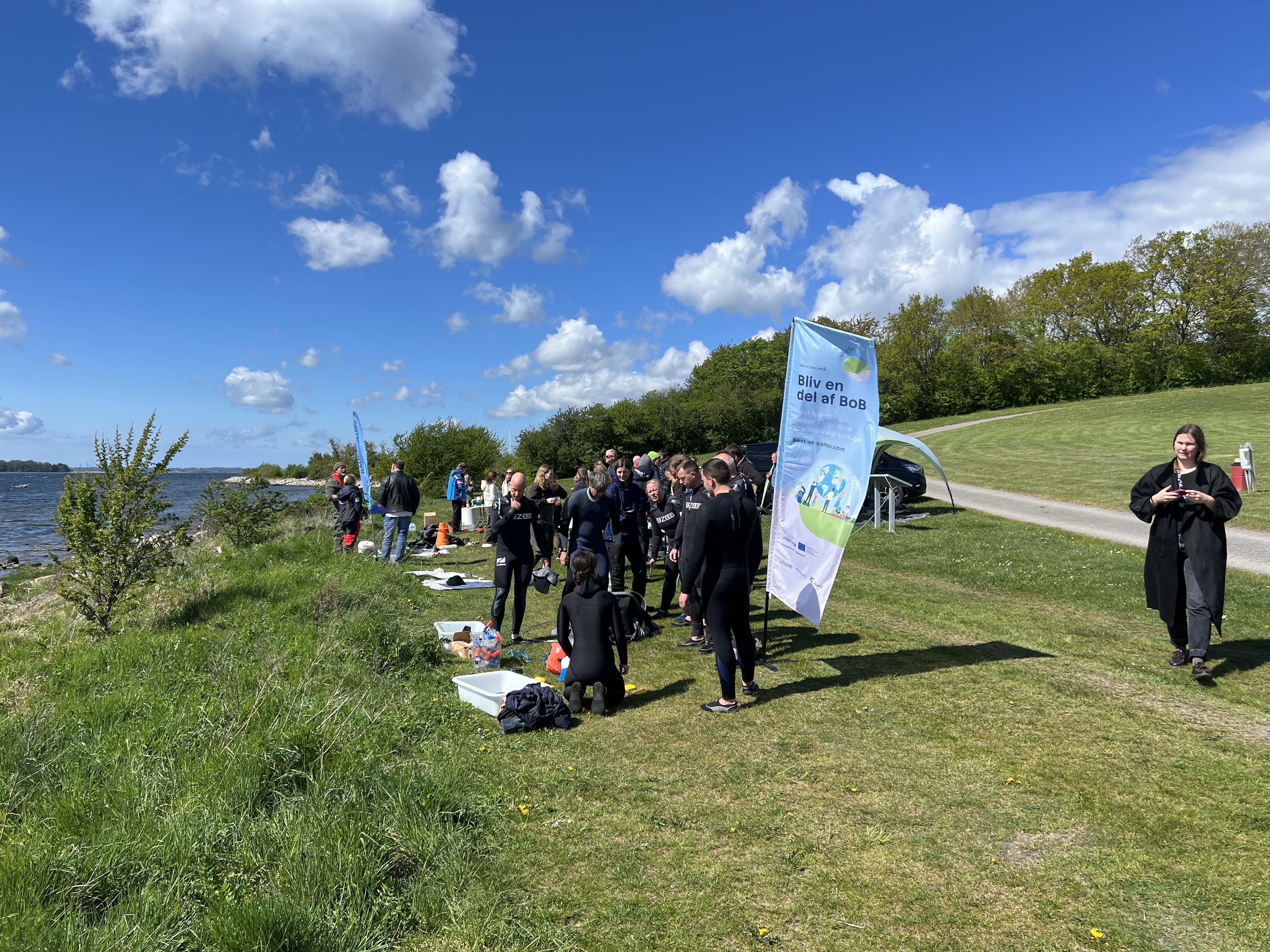
Bevægelsen Best of Baltic (BoB) arbejder med bæredygtighed og mod en grønnere fremtid, det gøres bl.a. ved at give en hjælpende hånd, der hvor samfundet har behov for det. Nu dykker vi ned i ålegræs, stenrev og muslingerev, som kan udføre økosystemtjenester til gavn for fjordens liv og miljø.
Nyd en forårseftermiddag i Sejlklubben og vandkanten ved Veddelev den 12. maj 2026 klokken 13.30-16.00, hvor vi planter ålegræs og går i dybden med biodiversitetsrapportering ved hjælp af undervandskameraer, computer vision og AI.
Undervejs vil der være mulighed for at iføre sig vaders, vandkikkert, våddragt og andet udstyr, som forholdene og sikkerheden fordrer.
Deltag og bliv klogere på, hvordan vi med ålegræsbede kan; forbedre vandkvaliteten ved at filtrere forurening og binde næringsstoffer, stabilisere havbunden og bidrage til kystsikring, optage CO2 og producere ilt, samt skabe levesteder for andre arter end os mennesker.
Energy
Let the light burn unnecessarily
3
(0) happens constantly, (1) happens frequently, (2) happens rarely, (3) never happens
(0) happens constantly, (1) happens frequently, (2) happens rarely, (3) never happens
Modern lamps require little electricity, and yet it is worthwhile not to let them burn unnecessarily, for example when there is enough daylight.
0.08
Compensation of GHG emissions
3
(0) not at all, (1) only for electricity, (2) also for use of cars even by the visitors (3) for everything including meat and diary consumption
(0) not at all, (1) only for electricity, (2) also for use of cars even by the visitors (3) for everything including meat and diary consumption
The compensation of greenhouse gas emissions is very controversial. Many events use large amounts of energy, cars, trucks, or offer animal based food and might therefore consider to donate an amount of money for the associated greenhouse gas emissions to a service provider who promises projects for greenhouse gas saving / binding (e.g. via forest afforestation). Unfortunately, some providers prove to be fraudulent because they do not achieve the promised effect at all. So only reputable providers should be supported. In addition, the compensation should not be misunderstood as a free ticket. It is therefore important to avoid emissions as much as possible and only compensate for the rest (see also the point Donations).
0.42
Nutrition
Vegan alternatives
2
(0) not at all, (1) to many meals, (2) to all meals, (3) more than one alternative
(0) not at all, (1) to many meals, (2) to all meals, (3) more than one alternative
Vegan means refraining from fish, meat, milk, cheese and other animal foods. Unthinkable for many people, on the one hand because of the taste, and on the other hand because they consider it unhealthy.
To the taste, it can be said: Among the extremely diverse vegan alternatives, something certainly tastes just as good or even better. We just have to try it - from vegan cheese to egg salad to burgers. Many celebrities and athletes are vegan. Vegan is booming.
Regarding health, it must be said: Our early ancestors eat healthier than we eat today. There was mixed food with only little meat and fish and also little grain and instead more legumes. If you eat a vegan diet, you have to pay attention to two nutrients: vitamin B12 and unsaturated omega 3 fatty acids. B12 can be bought for sucking (or as an additive in foods that are no longer called organic). Omega 3 fatty acids are available in linseed and algae oil. After a few months vegan, a blood test can show whether there are deficiency symptoms. As a rule, vegans eat healthier and are fitter than others.
What else does it bring: In addition to ethical reasons (keeping and killing animals), vegans help to prevent the deforestation of forests, because most areas in the world need the feed. In fact, we will not be able to feed the growing world population in the way we Germans. Vegans also prevent greenhouse gases from the methane emissions of cows, save enormous amounts of drinking water and prevent the pollution of soils, groundwater and waters.
Events should offer vegan alternatives, also like to inform about the advantages and find out in dialogue with the visitors what is well received and what is not. A real paternalism will not work - rather the feeling of pride, at least partly doing something better.
4.44
Vegetarian alternatives
3
(0) not at all, (1) to many meals, (2) to all meals, (3) more than one alternative
(0) not at all, (1) to many meals, (2) to all meals, (3) more than one alternative
Unlike the vegan diet, a vegetarian diet can also include milk, cheese or eggs. Vegetarian days are healthy, mean less animal husbandry and thus less consumption of land and water.
We Germans consume more than three times more animal products, which according to the EAT-Lancet Commission would be healthy for us and the planet.
Events should offer vegan alternatives, also like to inform about the advantages and find out in dialogue with the visitors what is well received and what is not. A real paternalism will not work - rather the feeling of pride, at least partly doing something better. We don't have to become vegans or vegetarians right away, but maybe just flexitarians.
3.01
Food from the region
3
(0) not at all, (1) less than 50%, (2) more than 50%, (3) 100% of food
(0) not at all, (1) less than 50%, (2) more than 50%, (3) 100% of food
Food from the region, from the weekly market and from the farm shop have not been transported far (there are of course also exceptions there) and strengthen the local economy.
However, there are also inefficient short transport routes when vehicles with little load drive to the points of sale. E-mobility and cargo bikes can help here.
Unfortunately, the regional is often also played out against the organic offer: regional, sprayed with pesticides food is not as good as regional organic food, and regional meat is not as good for the environment as the renunciation of meat.
0.23
Organic food
2
(0) not at all, (1) less than 50%, (2) more than 50%, (3) 100% of the products also available as organic
(0) not at all, (1) less than 50%, (2) more than 50%, (3) 100% of the products also available as organic
Organic is extremely important for biodiversity. We have the greatest species extinction since the extinction of the dinosaurs and the consequences are greater than those of climate change. Pesticides and mineral fertilizers endanger our future. In addition, soils from organic farming usually store more carbon and thus help against the climate catastrophe.
The counter-argument is often that the yields in organic farming are lower than in industrial agriculture and therefore more forests have to be cut down. This is true, for example, with cereals that are not unrestrictedly healthy. But if we eat less meat, waste less food and eat more healthy legumes, we have plenty of additional space available and can feed the entire world organically and even plant a little more forest.
Organic is more expensive. But on the one hand, many costs can be saved by less meat and on the other hand, it can be bought and cooked intelligently …. Of course, it is also to be questioned whether there must be such a low livelihood at all - environmental policy is also social policy.
1.61
Organic from the region
2
(0) not at all, (1) less than 50%, (2) more than 50%, (3) 100% of the products also available as organic from the region
(0) not at all, (1) less than 50%, (2) more than 50%, (3) 100% of the products also available as organic from the region
Which is better - the organic apple from New Zealand or the sprayed apple from the region? Answer: both wrong. Organic food from the region means less transport and is therefore even better than organic food with wide transport.
2.00
Organic from the region seasonal
2
(0) not at all, (1) less than 50%, (2) more than 50%, (3) 100% of the seasonal products also available as organic
(0) not at all, (1) less than 50%, (2) more than 50%, (3) 100% of the seasonal products also available as organic
Seasonal organic products in addition to regional organic products also have less energy expenditure for storage.
In the respective months, other products are available seasonally, so that we can eat healthy and tasty all year round with little transport and storage effort with regard to a seasonal calendar.
2.16
Legumes
2
(0) not at all, (1) less than 50%, (2) more than 50%, (3) 100% of the otherwise mostly cereal products
(0) not at all, (1) less than 50%, (2) more than 50%, (3) 100% of the otherwise mostly cereal products
Legumes are not only an alternative source of vegetable proter to animal products, but also extremely important for world nutrition. They bind nitrogen from the air in the soil and can achieve just as high yields in organic farming as in industrial agriculture. So we have to cut down fewer forests.
In addition, legumes are healthier than cereals. Harari describes in his bestseller "Sapiens" how we could probably get much older if we didn't eat so much cereal products.
After all, legumes are important for bees and biodiversity. Lupine, for example, also grows in northern Germany and can be used for meat substitutes, yogurt, coffee substitutes, ice cream or even noodles.
0.42
Tap water
3
(0) not at all, (1) less than 50%, (2) more than 50%, (3) 100% instead of purchased mineral water or soft drinks
(0) not at all, (1) less than 50%, (2) more than 50%, (3) 100% instead of purchased mineral water or soft drinks
Fortunately, tap water has long been a trend. There are drinking water dispensers in schools and the students have their drinking bottles with them, and managers also bring their drinking bottles to workshops. Many children do not even get used to the unhealthy sugar drinks.
Tap water is more strictly controlled than bottled drinks and saves a lot of energy and packaging.
Outdoor events need to be aware of the water hoses that have to meet the standards for drinking water.
1.30
Avoidance of food waste
3
(0) not at all, (1) less than 50%, (2) more than 50%, (3) I save or avoid 100% of the food to be thrown away
(0) not at all, (1) less than 50%, (2) more than 50%, (3) I save or avoid 100% of the food to be thrown away
Food is wasted from the field to the factories and transport routes to the throw away by us, the restaurants and the supermarkets. This ultimately means that more areas are needed for cultivation and thus forests are cut down and biodiversity is endangered with sprays and fertilizers.
We can save specifically rescued food (e.g. too small or wrinkled goods) and also donate leftover food in many places, e.g. to the food banks.
0.83
Mobility
Guest’s waiver of travel with their own car/motorcycle
1
(0) no measures, (1) visible information, (2) advertising for waiver, shuttle service, (3) concrete benefits
(0) no measures, (1) visible information, (2) advertising for waiver, shuttle service, (3) concrete benefits
Guests can be encouraged to arrive without a car. Already on the website, guest companies and organizers can advertise it, show public transport, make combined offers, offer a shuttle service to the train station, etc.
2.33
Charging stations for electric cars
0
(0) not at all, (1) less than 50%, (2) more than 50%, (3) for all visitors/staff with electric vehicles
(0) not at all, (1) less than 50%, (2) more than 50%, (3) for all visitors/staff with electric vehicles
If we want organizers and visitors to use electric vehicles we should consider offering them possibilities for charging as well, provided the power supply allows for it. The charging options, which initially probably are underutilized, must first be there, but then people switch to electric cars with a time delay. Providing visitors and organizers with enough charging stations here is a real game changer.
2.60
Promote the use of public transport on site
1
(0) no measures, (1) information on HOW, (2) information on WHY, (3) free or discounted tickets
(0) no measures, (1) information on HOW, (2) information on WHY, (3) free or discounted tickets
Local public transport and also long-distance transport by train and bus (in the case of bus, the road infrastructure is still required) means considerably less energy and resource requirements than individual transport with cars or motorcycles.
Long-distance buses only perform so well because they are limited to well-used routes, while the train also runs at unfavorable times and has to connect remote places, which then leads to less than half-full trains.
Event organizers can encourage their visitors to travel on site by public transport, e.g. simple information about HOW, with information about WHY, or even with free tickets.
0.39
Bicycle shelters
2
(0) not at all, (1) for less than 50%, (2) for more than 50%, (3) all can store their bicycles
(0) not at all, (1) for less than 50%, (2) for more than 50%, (3) all can store their bicycles
What has recently been a successful model in some countries and cities is still a problem in others: to give cyclists priority over car traffic. The willingness to ride a bike, even in bad weather, is higher than ever. E-cargo bicycles make it possible to at least do without the second car. An event can do a lot from a safe bicycle shelter with charging possibility (extra step) to rental bicycles on park and ride places.
0.41
Garbage
Buy unpacked or refills
2
(0) never, (1) sometimes, (2) mostly, (3) always
(0) never, (1) sometimes, (2) mostly, (3) always
We are used to the fact that everything is packed and we don't care much about the packaging. For some foods, the packaging is more expensive in the production than the content. Paying attention to the packaging sends a signal to manufacturers and retailers. Refills are an option as well.
For food, there are so-called unpackaged shops or at least the possibility of using deposit containers (own step) or cotton bags brought along for loose vegetables and fruit.
In basically all markets, we should have our own bags with us.
0.65
Separate garbage consistently
1
(0) not at all, (1) some, (2) mostly, (3) always
(0) not at all, (1) some, (2) mostly, (3) always
Consistently separating waste, including green waste, glass and paper, is not as self-evident as can be assumed. Many make little effort here and don't really know what belongs in which bin. The residual waste bin also costs the public sector a lot of money, while the recyclable and green waste bin are free of charge. But also special waste, such as batteries, incandescent lamps, electrical appliances, etc. must be disposed of properly.
Events can place separating waste bins with information signs everywhere. In general, it is also possible that a sign indicates that the cleaners take over the separation for the guests. But better, the visitors can do that.
0.65
Recycled paper
2
(0) never, (1) sometimes, (2) mostly, (3) always
(0) never, (1) sometimes, (2) mostly, (3) always
Non-recycled paper is often cheaper, but means cutting of forests, contamination of water during production and a high energy requirement.
Recycled paper for toilet paper, writing paper, packaging, envelopes, wrapping paper, etc. should be a matter of course today. But we have to pay attention to it and choose it.
Recycled paper can also be snow-white, but it should then not be bleached with chlorine but oxygen. A note placed somewhere can make you proud and contribute to event's identity.
1.23
Paperless office/media
3
(0) not at all, (1) some, (2) most, (3) all only digital.
(0) not at all, (1) some, (2) most, (3) all only digital.
Saving paper helps to protect forests - recycling paper also ultimately means more demand for fresh pulp from trees.
We don't even need to print many things in the first place, but can save them on devices that we already have. For internal processes but also for dialogue with customers, digital forms should continue to prevail.
So the exhibitors etc. are welcome to ask if they need a paper version of the invoice.
0.61
Reusable
3
(0) not at all, (1) often, (2) mostly, (3) always
(0) not at all, (1) often, (2) mostly, (3) always
For events it makes perfect sence to use reusable glasses and dishes. Pant on glasses and dishes combined with mobile dishwashers for rent are a solution.
After unpacked and for drinks after the tap water, the best thing we can do is to buy our food in reusable containers. Also ask whether the containers are transported for example empty throughout Germany, or whether North German beer flows into the empty bottle of Bavarian beer and vice versa. Next question, what energy and water does it cost to clean the containers. Composite packaging or cans that are easy to recycle are the better alternative according to some studies. However, in such studies, it is necessary to look closely at what is being compared. Ultimately, it is important to close regional cycles.
Next question, whether the containers should be made of glass or plastic - glass is recycled more often, plastic is lighter and means less energy during transport.
0.81
Flea markets, repair cafes, classified ads instead of throwing away
3
(0) not at all, (1) sometimes, (2) mostly, (3) always
(0) not at all, (1) sometimes, (2) mostly, (3) always
Many things after an event are actually thrown away, although others could still do something with it. It is more convenient for us not to repair it than to have a stand at the flea market or to have to send it for little money. But the good feeling of doing the right thing motivates.
0.24
Land use
Renaturation
3
(0) not at all, (1) some, (2) most, (3) all
(0) not at all, (1) some, (2) most, (3) all
In many places, moors, streams, etc. have been lost with the settlement and intensification of agriculture. Renaturalizing this often means an enormous gain for biodiversity, climate and also flood protection.
1.04
Social
Crafts from the region
3
(0) not at all, (1) sometimes, (2) mostly, (3) always
(0) not at all, (1) sometimes, (2) mostly, (3) always
This is about living and working in the region, about strengthening the community. The birdhouse from a social workshop or the PV system from the electrician on site (if he has further training). The award criteria of the municipalities must of course be legally secure.
If the work is good, a discreet advertising sign can also draw attention to the craft business in return.
1.06
Fair trade products
3
(0) not at all, (1) some, (2) mostly, (3) always, even on the go
(0) not at all, (1) some, (2) mostly, (3) always, even on the go
At Fair-Trade, we usually think of the label of the same name - which is no longer in disrepute. But there are also other labels - some rather greenwashing, some quite trying to do better. Fair is not always the same as organic and organic is not always fair (but some labels combine both).
The importance is immense: fair working conditions in the world ensure less migration, more climate protection and a more peaceful world.
Extremely remarkable is the background of chocolate and the connection between child slavery (!) And the common products from Nutella to children's chocolate to the Mars bar: https://edition.cnn.com/world/freedom-project
Companies and events can therefore be pioneers for a better world themselves here in the food or in the work clothes or the hand-sewn football.
3.20
Fair wages
3
(0) I don't care at all, (1) partially pay attention to it, (2) get involved, (3) always pay attention to it
(0) I don't care at all, (1) partially pay attention to it, (2) get involved, (3) always pay attention to it
Many people who earn above average can only do this because others earn below average. The gap between rich and poor is getting bigger and bigger. Consumers complain about cheap wages, but the price increase by 50 cents is rarely accepted.
What we deserve is not, as liberals or neoliberals like to think, just a question of diligence. It is the product (!) out of diligence, skill and the right framework conditions. Anyone who knows many talented and hard-working people who are simply not lucky develops empathy and is willing to pay more, even if it is through tips.
Companies can set an example in the case of remuneration, in particular for less well-paid activities within the scope of their possibilities.
0.74
Volunteering
3
(0) not at all, (1) sometimes, (2) much, (3) maximum
(0) not at all, (1) sometimes, (2) much, (3) maximum
Volunteering, whether at the fire brigade, in the sports club or the help in the neighborhood, is enormously important for togetherness and society. An event can organize volunteering.
0.74
Cultural promotion
3
(0) not at all, (1) promote some, (2) promote a lot, (3) maximum each measured by what is basically conceivable.
(0) not at all, (1) promote some, (2) promote a lot, (3) maximum each measured by what is basically conceivable.
Cultural promotion can take place in all facets - from young people who make music to exhibitions to the care of traditional festivals.
0.07
Partnerships with developing countries
1
(0) not at all, (1) support some, (2) promote them a lot, (3) maximum each measured by what is basically conceivable.
(0) not at all, (1) support some, (2) promote them a lot, (3) maximum each measured by what is basically conceivable.
Bringing people together in the world is more important than ever in times of globalization. Events can also get involved here beyond the direct economic interest.
1.37
Nature experience opportunities
3
(0) not at all, (1) promote some, (2) promote a lot, (3) maximum each measured by what is basically conceivable.
(0) not at all, (1) promote some, (2) promote a lot, (3) maximum each measured by what is basically conceivable.
Educational trails, information boards, exhibitions, excursions, etc., if necessary also together with schools and nature conservation organizations.
0.07
Other Consumption
Used or long-lived furniture
3
(0) not at all, (1) sometimes, (2) often, (3) basically
(0) not at all, (1) sometimes, (2) often, (3) basically
Many furniture cannot stand being moved or even disassembled and reassembled. They are primarily cheap and the business model is that after a few years we want to buy new furniture. Looking at how valuable the furniture is and then being able to repair it takes us a whole lot further on the way to a better world. It is also amazing what good pieces there are on the used market.
1.30
Ecological furniture
3
(0) not at all, (1) sometimes, (2) often, (3) basically
(0) not at all, (1) sometimes, (2) often, (3) basically
Ecological furniture is made of natural materials without questionable chemical additives or varnishes. They are usually very expensive, but also last many decades and can usually be easily repaired and renovated.
0.26
Events
Limitation of noise
3
(0) not at all, (1) sometimes, (2) often, (3) basically
(0) not at all, (1) sometimes, (2) often, (3) basically
If possible limit the noice emissions from you event
0.00
Rethinking of fire works
3
(0) not at all, (1) sometimes, (2) often, (3) basically
(0) not at all, (1) sometimes, (2) often, (3) basically
Fireworks harm animals and emit huge amounts of fine particles.
0.00
Environment and social as a topic
3
(0) not at all, (1) sometimes, (2) often, (3) basically
(0) not at all, (1) sometimes, (2) often, (3) basically
The protection of the environment as well as social topics can be a theme of an event.
0.00