
We are BoB

We are BoB

Welcome, Thomas Hartz !
Great, you are Best of Baltic, your score is
72
For 2026 the minimum score is
27
In 2027 the minimum score will be
42
Hartzis Honig – Regionaler Honig aus Lübeck
Hartzis Honig ist eine kleine, inhabergeführte Imkerei aus Lübeck-Kücknitz. Mit viel Leidenschaft und eigener Handarbeit entstehen hier hochwertige Honige aus der Region.
Unsere Bienenvölker stehen an verschiedenen Standorten rund um Lübeck. Wir wandern nicht mit unseren Bienen, sondern lassen sie dort sammeln, wo sie zu Hause sind.
Bienen sind für unsere Natur und die heimische Pflanzenwelt unverzichtbar. Deshalb liegt uns nicht nur die Qualität unseres Honigs am Herzen, sondern auch das Bewusstsein für die Bedeutung der Bestäubung und den Schutz unserer Natur.
Was 2020 mit einem Bienenschwarm im eigenen Apfelbaum begann, ist inzwischen zu einer kleinen Honigmanufaktur gewachsen.
Mit Hartzis Honig möchten wir zeigen, wie wertvoll regionale Lebensmittel, verantwortungsvolle Imkerei und die Verbundenheit mit unserer Heimat sind.
Hartzis Honig – Regional. Natürlich. Mit Leidenschaft.
Energy
Switching to a ‘real’ green electricity provider
1
(0) no special tariff, (1) eco from the conventional provider, (2) eco from the local provider (3) with a pure green electricity provider
(0) no special tariff, (1) eco from the conventional provider, (2) eco from the local provider (3) with a pure green electricity provider
Your country has most likely real green electricity providers, as they purchase or implement the appropriate capacities of green electricity for each customer. The other electricity providers only offer an electricity mix. The share of green electricity is sold more expensively as an eco-tariff to some customers, while the other customers theoretically only receive the shares of gas, coal, etc.
http://www.imodeler.info/ro?key=CF8Gsu47BnYHLi5NHUWXKVA
0.44
Energy-saving devices
3
(0) outdated devices, (1) with old energy-saving seal, (2) with up-to-date and (3) with the latest best value
(0) outdated devices, (1) with old energy-saving seal, (2) with up-to-date and (3) with the latest best value
It is always a consideration whether the further use of an older device does not require less energy or water than the production of a new, energy-efficient device. Therefore, the energy requirement along the entire product life cycle (from production to use to disposal) must be considered. Companies need the competence to weigh up the right time for a new purchase of devices, but also the determination to then purchase the most sustainable and not only cheapest devices.
0.23
LED lamps
3
(0) none at all, (1) older energy-saving lamps, (2) argely LED, (3) complete LED lighting
(0) none at all, (1) older energy-saving lamps, (2) argely LED, (3) complete LED lighting
LED 'light bulbs' are now available for really all lamps, even with pleasantly warm light colors. Also, think about the lights outside - are they LED as well?
0.23
Motion detector
2
(0) none, (1) less than half, (2) more than half, (3) everywhere
(0) none, (1) less than half, (2) more than half, (3) everywhere
Motion detectors make sense in all rooms including outdoor areas, where we potentially let the light burn for too long, for example in the hallway, basement, garage, etc. Of course, it is important that the light does not stay on for too long.
0.16
Avoidance of stand-by times
3
(0) not at all, (1) for some devices, (2) for most, (3) for all
(0) not at all, (1) for some devices, (2) for most, (3) for all
Standby power consumption is often reminded and extrapolated. For example, if a screen consumes 5 watts in standby, that is 120 watt hours (Wh) per day, i.e. about one eighth of a kilowatt hour (35 cents/kWh). Companies can quite easily calculate for themselves what savings potential all their computers, screens, beamers and even routers have if they do not use StandBy.
0.16
Let the light burn unnecessarily
0
(0) happens constantly, (1) happens frequently, (2) happens rarely, (3) never happens
(0) happens constantly, (1) happens frequently, (2) happens rarely, (3) never happens
Modern lamps require little electricity, and yet it is worthwhile not to let them burn unnecessarily, for example when we are not in the room for a long time. Corridors, toilet rooms, cellars often have the light burning unnecessarily. In some indoor and outdoor areas, companies also sometimes have the light on too long or too early.
0.08
Renunciation of extreme power consumers
0
(0) have many, (1) have more than two, (2) have one, two (3) have no
(0) have many, (1) have more than two, (2) have one, two (3) have no
Apart from the fact that every device can have a high power consumption, a refrigerator is not regularly defrosted, the door seal is leaking, the washing machine is driven with too high temperatures and spin numbers, etc., there are still some unnecessary things that consume a lot of electricity:
In the company, these can be exaggerated light installations, electric bollards, and much more.
0.39
Housing, Buildings
Insulation
2
(0) more 140kWh/m2a, (1) down to 70, (2) to 15, and (3) for less than 15 kWh/m2a
(0) more 140kWh/m2a, (1) down to 70, (2) to 15, and (3) for less than 15 kWh/m2a
Thermal insulation is extremely important. Investing here means saving energy and costs. The argument that building will then become too expensive must be clearly put into perspective. One way, of course, is to have to insulate smaller living spaces. The other to become generally more efficient when building. Then ecological building materials will also become affordable. Old houses that can no longer be sensibly insulated are perhaps worth so much more as a new building that financing is not a problem. (Note: the figures are for Germany)
1.17
Save water (devices)
3
(0) outdated devices, (1) with poor consumption value, (2) with recently current and (3) with the latest best value
(0) outdated devices, (1) with poor consumption value, (2) with recently current and (3) with the latest best value
Appliances such as washing machines and dishwashers must specify a value for water consumption when buying new. It is therefore worthwhile to compare water and energy consumption equally and also to research corresponding test reports..
0.35
Rainwater harvesting
3
(0) do not use rainwater, (1) small rainwater barrel, (2) cisterns for garden, (3) for garden and household
(0) do not use rainwater, (1) small rainwater barrel, (2) cisterns for garden, (3) for garden and household
We can use rainwater at least for garden irrigation in the case of unproblematic materials of the roof. With significantly more effort also for washing machine and toilet flushing. Even if it takes quite a long time economically before it's worth it, it's a good thing.
1.06
Natural building materials and paints
2
(0) not at all, (1) with less than half, (2) with more than half, (3) with everything
(0) not at all, (1) with less than half, (2) with more than half, (3) with everything
Building materials such as concrete, plaster, steel or even aluminum have a high ecological footprint and mean many greenhouse gases. The foamed insulation materials are also in the criticism. In addition, the negative consequences of conventional paints and adhesives are often unknown, which then lead to toxic exhaust gases in waste incineration plants due to ultimately ineffective filters. Natural building materials and colors are significantly more expensive, although the non-natural materials are often extremely expensive when it comes to disposal. So it is the good feeling, the better smell and the healthier building biology that make us do the right thing here.
1.37
Solar thermal energy
1
(0) not at all, (1) small system, (2) for hot water, (3) for hot water and support of heating
(0) not at all, (1) small system, (2) for hot water, (3) for hot water and support of heating
Solar thermal energy makes it possible to heat water over part of the roof area most of the year and then use it for hot water or even to support heating.
It is quite inexpensive in the actual purchase - only pipes have to be laid and the heat for the hot water or heating must be transferred via a heat exchanger. Since solar thermal energy works mainly in sunshine, it is often suggested to install PV modules on the same surface and to electrically heat water over them. The yield in kW is higher with solar thermal energy, but the installation of PV is easier.
0.66
Lowered living room temperature (without mold)
2
(0) over 20 degrees, (1) 19-20, (2) 18, (3) 17
(0) over 20 degrees, (1) 19-20, (2) 18, (3) 17
In most study rooms it is too warm in winter - we walk around in a T-shirt instead of putting on thick sweaters and a cardigan. The energy-saving potential is considerable. When lowering the temperature, attention must be paid to the indoor climate and the possible risk of mold formation. This depends above all on the humidity.
Companies also have to observe workplace regulations.
0.55
Waiver of air conditioning
3
(0) not at all, (1) less than 50%, (2) more than 50%, (3) 100% of the rooms
(0) not at all, (1) less than 50%, (2) more than 50%, (3) 100% of the rooms
Air conditioning systems are also gaining in importance in temperate latitudes. Intelligent construction and ventilation and the use of thermal protection roller blinds can avoid these power guzzlers.
In warm regions, a corresponding education of the guests can take place. Often a fan is also useful.
0.39
Intelligent ventilation
3
(0) not at all, (1) less than 50%, (2) more than 50%, (3) 100% of the times in the heating season
(0) not at all, (1) less than 50%, (2) more than 50%, (3) 100% of the times in the heating season
Intelligent ventilation does not mean too late and not too long. It is too late when we get tired when the air is used up, get a headache and the humidity becomes too high. It is too long when the air has already been replaced and is cool, but we also ventilate the materials (walls, furniture) even longer.
Heat ultimately means that things or air vibrate. When the air is exchanged, but the objects and walls are still vibrating, the fresh air is quickly heated. Even if the walls get cold, mold can form on them and we need expensive heating energy to make everything vibrate again.
By the way, CO2 measuring devices help to ventilate in time and not for too long. However, these should not be a useless gadget, but perhaps used for practice one after the other in the rooms and gladly lent. A nice game is the competition, how good the sense of the people in the room is to ventilate in time and not too long.
Companies in particular have the potential to keep the doors in the entrance area not too far and not too long open.
0.23
Nutrition
Food from the region
2
(0) not at all, (1) less than 50%, (2) more than 50%, (3) 100% of food
(0) not at all, (1) less than 50%, (2) more than 50%, (3) 100% of food
Food from the region, from the weekly market and from the farm shop have not been transported far (there are of course also exceptions there) and strengthen the local economy.
However, there are also inefficient short transport routes when vehicles with little load drive to the points of sale. E-mobility and cargo bikes can help here.
Unfortunately, the regional is often also played out against the organic offer: regional, sprayed with pesticides food is not as good as regional organic food, and regional meat is not as good for the environment as the renunciation of meat.
0.23
Organic food
2
(0) not at all, (1) less than 50%, (2) more than 50%, (3) 100% of the products also available as organic
(0) not at all, (1) less than 50%, (2) more than 50%, (3) 100% of the products also available as organic
Organic is extremely important for biodiversity. We have the greatest species extinction since the extinction of the dinosaurs and the consequences are greater than those of climate change. Pesticides and mineral fertilizers endanger our future. In addition, soils from organic farming usually store more carbon and thus help against the climate catastrophe. The counter-argument is often that the yields in organic farming are lower than in industrial agriculture and therefore more forests have to be cut down. This is true, for example, with cereals that are not unrestrictedly healthy. But if we eat less meat, waste less food and eat more healthy legumes, we have plenty of additional space available and can feed the entire world organically and even plant a little more forest.
Organic in the canteen or at the kiosk or at company events is of course more expensive - but if it is not exemplified somewhere, what do we expect in the private sector.
1.61
Organic from the region
2
(0) not at all, (1) less than 50%, (2) more than 50%, (3) 100% of the products also available as organic from the region
(0) not at all, (1) less than 50%, (2) more than 50%, (3) 100% of the products also available as organic from the region
Which is better - the organic apple from New Zealand or the sprayed apple from the region? Answer: both wrong. Organic food from the region means less transport and is therefore even better than organic food with wide transport.
Organic in the canteen or at the kiosk or at events is of course more expensive - but if it is not exemplified somewhere, what do we expect in the private sector. Sometimes a direct delivery from providers from the region is a way to save costs.
2.00
Organic from the region seasonal
2
(0) not at all, (1) less than 50%, (2) more than 50%, (3) 100% of the seasonal products also available as organic
(0) not at all, (1) less than 50%, (2) more than 50%, (3) 100% of the seasonal products also available as organic
Seasonal organic products in addition to regional organic products also have less energy expenditure for storage.
In the respective months, other products are available seasonally, so that we can eat healthy and tasty all year round with little transport and storage effort with regard to a seasonal calendar.
2.16
Legumes
1
(0) not at all, (1) less than 50%, (2) more than 50%, (3) 100% of the otherwise mostly cereal products
(0) not at all, (1) less than 50%, (2) more than 50%, (3) 100% of the otherwise mostly cereal products
Legumes are not only an alternative source of vegetable proter to animal products, but also extremely important for world nutrition. They bind nitrogen from the air in the soil and can achieve just as high yields in organic farming as in industrial agriculture. So we have to cut down fewer forests.
In addition, legumes are healthier than cereals. Harari describes in Sapiens how we could probably get much older if we didn't eat so much cereal products.
After all, legumes are important for bees and biodiversity. Lupine, for example, also grows in northern Germany and can be used for meat substitutes, yogurt, coffee substitutes, ice cream or even noodles.
0.42
Tap water
2
(0) not at all, (1) less than 50%, (2) more than 50%, (3) 100% instead of purchased mineral water or soft drinks
(0) not at all, (1) less than 50%, (2) more than 50%, (3) 100% instead of purchased mineral water or soft drinks
Fortunately, tap water has long been a trend. There are drinking water dispensers in schools and the students have their drinking bottles with them, and managers also bring their drinking bottles to workshops. Many children do not even get used to the unhealthy sugar drinks.
Tap water is more strictly controlled than bottled drinks and saves a lot of energy and packaging.
Companies can set up water dispensers - if necessary also work with filters, for example to remove chlorine odors.
1.30
Mobility
Waiver of air travel
3
(0) more than one per year, (1) one per year, (2) one every few years, (3) none or less often than every 5 years
(0) more than one per year, (1) one per year, (2) one every few years, (3) none or less often than every 5 years
Flying is a great experience for most people like experiencing distant places. Flying short distances should rightly lead to 'flight shame' - some countries are planning to ban domestic flights completely.
The problem with flying is, on the one hand, that we travel a lot of kilometers, even if the energy requirement per kilometer and person is not so high. On the other hand, greenhouse gases are transported directly to the heights where they harm us.
So we should only use the plane for rare long-distance trips and then rather stay longer in the places. Many, on the other hand, fly several times a year, partly within Europe - some even to sustainability conferences or just to spontaneously escape the harsh weather in Germany. Unfortunately, flying is even subsidized and is often cheaper than train or car.
0.83
Carpooling
2
(0) always drive individually, (1) every now and then, (2) mostly, (3) basically, if possible, driving with others
(0) always drive individually, (1) every now and then, (2) mostly, (3) basically, if possible, driving with others
Many routes and times are not served by public transport. It is often worthwhile to drive in the car together with others. Even if the car is left at home and the times have to be adjusted, it can make us proud to do the right thing with a view to a better world.
In addition to carpooling in the circle of acquaintances, there are also portals that organize carpooling - often also for longer trips. As an employer, the municipalities can organize something for their employees here.
0.39
Garbage
Buy unpacked or refills
2
(0) never, (1) sometimes, (2) mostly, (3) always
(0) never, (1) sometimes, (2) mostly, (3) always
We are used to the fact that everything is packed and we don't care much about the packaging. For some foods, the packaging is more expensive in the production than the content. Paying attention to the packaging sends a signal to manufacturers and retailers. Refills are an option as well.
For food, there are so-called unpackaged shops or at least the possibility of using deposit containers (own step) or cotton bags brought along for loose vegetables and fruit. To fill up the pantry or to cater for events, attention should therefore be paid to the packaging.
Office supplies can be delivered unpacked in deposit boxes (e.g. from Memo).
0.65
Separate garbage consistently
3
(0) not at all, (1) some, (2) mostly, (3) always, even on the go
(0) not at all, (1) some, (2) mostly, (3) always, even on the go
Consistently separating waste, including green waste, glass and paper, is not as self-evident as can be assumed. Many make little effort here and don't really know what belongs in which bin. The residual waste bin also costs the public sector a lot of money, while the recyclable and green waste bin are free of charge. But also special waste, such as batteries, incandescent lamps, electrical appliances, etc. must be disposed of properly.
0.65
Recycling-Paper
3
(0) never, (1) some, (2) mostly, (3) always
(0) never, (1) some, (2) mostly, (3) always
Non-recycled paper is often cheaper, but means cutting of forests, contamination of water during production and a high energy requirement.
Recycled paper for toilet paper, writing paper, packaging, envelopes, wrapping paper, etc. should be a matter of course today. But we have to pay attention to it and choose it.
Recycled paper is also snow-white, but it should then not be bleached with chlorine but oxygen.
1.23
Paperless office/media
2
(0) not at all, (1) some, (2) most, (3) all only digital.
(0) not at all, (1) some, (2) most, (3) all only digital.
Saving paper helps to protect forests - recycling paper also ultimately means more demand for fresh pulp from trees.
We don't even need to print many things in the first place, but can save them on devices that we already have. For internal processes but also for dialogue with customers, digital forms should continue to prevail.
0.61
Flea markets, repair cafes, classified ads instead of throwing away
2
(0) not at all, (1) sometimes, (2) mostly, (3) always
(0) not at all, (1) sometimes, (2) mostly, (3) always
Many things are actually thrown away, although others could still do something with it. It is more convenient for us not to repair it than to have a stand at the flea market or to have to send it for little money. But the good feeling of doing the right thing motivates. A company can avoid garbage here - even if throwing it away probably meant little effort.
0.24
Garbage collection campaigns
1
(0) not at all, (1) some, (2) many, (3) systematically throughout the year
(0) not at all, (1) some, (2) many, (3) systematically throughout the year
Garbage collection as an event also for the clubs with subsequent meeting, possibly sponsored by the local economy, helps to get nature clean and to raise awareness. Companies can sponsor or participate as a team.
0.08
Land use
Avoidance of surface sealing
3
(0) no consideration, (1) some waiver, (2) a lot of waiver, (3) maximum possible waiver
(0) no consideration, (1) some waiver, (2) a lot of waiver, (3) maximum possible waiver
Surface sealing is a problem not only in growing civilizations, but also in Germany. We live on too much living space, are still building new streets and courtyard driveways and our terraces are also getting bigger and bigger.
To specifically dispense with area, to build in height, water-permeable paving, green roofs (own point) and, weighing up all the advantages and disadvantages, to expand one's own house to the height in order to enable more people to live on the same sealed area, are valuable steps. By the way, an English lawn is ecologically not very valuable, for example, compared to a flower or clover meadow or a vegetable garden.
Companies can systematically look at which areas do not have to be sealed and perhaps can be provided with flower meadows.
0.83
Renaturation
3
(0) not at all, (1) some, (2) most, (3) all
(0) not at all, (1) some, (2) most, (3) all
In many places, moors, streams, etc. have been lost with the settlement and intensification of agriculture. Renaturalizing this often means an enormous gain for biodiversity, climate and also flood protection.
1.04
Insect hotels, birdhouses, field mouse boxes, ...
3
(0) not at all, (1) some, (2) many, (3) maximum
(0) not at all, (1) some, (2) many, (3) maximum
Insect hotels or just old, higher tree stumps and dead wood on the ground, nesting boxes and, if useful, bat boxes are great ways to maximize biodiversity in your own environment. School classes can also participate here.
0.48
Bird feeding in winter
3
(0) not at all, (1) sometimes, (2) often, (3) basically
(0) not at all, (1) sometimes, (2) often, (3) basically
In the past, it was considered controversial whether birds should be fed, or whether they forget to find food themselves and instead promote the concentration of many birds in one place diseases. Today it is clear that with our well-kept gardens, leaf vacuum cleaners and perfect combine harvesters, we leave too little for the birds and they have to be fed. Many argue that we should even feed them in the summer.
0.32
Insect-friendly flowering plants
3
(0) not at all, (1) in some places, (2) in many places, (3) in all places and possibly also on the go
(0) not at all, (1) in some places, (2) in many places, (3) in all places and possibly also on the go
It is hard to believe that the future of our diet depends on the use of pesticides and their influence on insects that have to pollinate our plants. Many pollinators are threatened with extinction and in addition to the purchase of organic, we can offer these insects flowers on our areas. In fact, some plants are neither bee-nor bird-friendly. On the other hand, fruit trees and most vegetables are already great opportunities to promote bees, bumblebees, etc. At the flower meadows there are one- and multi-year-olds.
0.64
Organic vegetable and fruit cultivation
3
(0) not at all, (1) some, (2) much, (3) maximum
(0) not at all, (1) some, (2) much, (3) maximum
Do we harm the regional organic farmers when crops, such as orchards, grow on public land?
No, because hardly anyone will be able to take care of it themselves. Rather, the main problem is the use of land. English lawns, ornamental plants, weed destruction, etc. harm the soil and biodiversity. Instead, nature-friendly crops are needed.
If a company shies away from the maintenance effort, permaculture and the cultivation of perennial plants may make sense. Also, the cooperation with beekeepers and school classes, the possibility of public gardening and sponsorships are great measures for a better world.
Urban gardening is also popular when companies have raised beds on their roofs and offer employees something to relax and have a bite.
1.56
Planting rare species
2
(0) not at all, (1) some, (2) many, (3) always when there are alternatives
(0) not at all, (1) some, (2) many, (3) always when there are alternatives
Rare and exotic (not invasive) species often have less yields than our standard products (e.g. apples), but they are usually particularly tasty, encourage conversations with others and help to increase biodiversity. Farms should choose robust plants that can cope even with extreme weather. Diversity ensures resilience against specific diseases.
0.96
Animal/insect friendly outdoor lighting
3
(0) not at all, (1) isolated, (2) in many places, (3) everywhere
(0) not at all, (1) isolated, (2) in many places, (3) everywhere
The awareness of nature-friendly outdoor lighting has increased significantly, there are already so-called star cities that do not want to "pollute" the view of the night sky with light. The street lamps are about whether they shine into the trees or on the street and with which light color they attract how many insects/moths. But we can also do a lot wrong in our gardens, with too bright light, motion detectors that disturb hedgehogs, or those cheap solar lamps that are already hazardous waste with the purchase and do not let the garden get dark in the first place.
0.16
Renunciation of road salt
3
(0) not at all, (1) less than 50%, (2) more than 50%, (3) always
(0) not at all, (1) less than 50%, (2) more than 50%, (3) always
Road salt is convenient and safe, but a considerable burden for pets, the trees and the surface water. Replacing this with split means more effort, but it's worth it.
0.24
Waiver of weed killers
3
(0) not at all, (1) less than 50%, (2) more than 50%, (3) always
(0) not at all, (1) less than 50%, (2) more than 50%, (3) always
Sidewalks can be kept mechanically or by flames weed-free or the herb can also grow sometimes. The beds can be kept mechanically herb-free or laid out from the outset in such a way that herb does not matter. Pesticides are one of the main causes of species extinction and water pollution.
0.24
Social
Crafts from the region
3
(0) not at all, (1) sometimes, (2) mostly, (3) always
(0) not at all, (1) sometimes, (2) mostly, (3) always
This is about living and working in the region, about strengthening the community. The birdhouse from a social workshop or the PV system from the electrician on site (if he has further training). The award criteria of the municipalities must of course be legally secure.
If the work is good, a discreet advertising sign can also draw attention to the craft business in return.
1.06
Volunteering
1
(0) not at all, (1) sometimes, (2) much, (3) maximum
(0) not at all, (1) sometimes, (2) much, (3) maximum
Volunteering, whether at the fire brigade, in the sports club or the help in the neighborhood, is enormously important for togetherness and society. Companies can help here to honor volunteering and accompany it through donations.
0.74
Support organ and blood donations
2
(0) not at all, (1) blood or organ, (2) blood and organ, (3) blood, organ and Bone marrow
(0) not at all, (1) blood or organ, (2) blood and organ, (3) blood, organ and Bone marrow
Both organ and blood donations or even bone marrow donations cost us overcoming - until we or our loved ones are dependent on it.
Here, too, the same applies - those who do it can be proud of themselves. Entrepreneurs can go ahead and release their employees, for example, if it is blood donation during working hours.They also can spread information about the topic and management can be a role model.
1.60
Citizens' meeting (clubs, fire brigade, squares)
2
(0) not at all, (1) promote some, (2) promote a lot, (3) maximum each measured by what is basically conceivable.
(0) not at all, (1) promote some, (2) promote a lot, (3) maximum each measured by what is basically conceivable.
Support of clubs, squares and halls for the gathering of citizens
0.12
Nature experience opportunities
2
(0) not at all, (1) promote some, (2) promote a lot, (3) maximum each measured by what is basically conceivable.
(0) not at all, (1) promote some, (2) promote a lot, (3) maximum each measured by what is basically conceivable.
Educational trails, information boards, exhibitions, excursions, etc., if necessary also together with schools and nature conservation organizations.
0.07
Clothes
Organic cotton/ linen/ hemp/ wood fiber/ certified virgin wool
1
(0) not at all, (1) some, (2) many things, (3) everything
(0) not at all, (1) some, (2) many things, (3) everything
Globally, conventional cotton is an environmental problem due to the use of sprays and the high water consumption. In addition, the textile factories poison entire rivers and exploit people during conventional dyeing.
In addition to ecological cotton, there are other natural fibers with sometimes much less damage to the environment.
In the case of virgin wool, attention must be paid to the certification, which excludes animal suffering.
By the way, there is now also outdoor clothing made of densely woven organic cotton as an alternative to the plastic fibers. Plastic fibers always allow microplastics to enter the wastewater during washing and microplastics in the environment may lead to multi-resistant super germs - a long history.
With the points for clothing, if you do not buy conventional cotton, but sometimes choose recycled and sometimes organic cotton, you can give a full 3 points for both.
By the way, organic is also possible with curtains, tablecloths and bed linen!!!
1.69
Recycled cotton
1
(0) not at all, (1) some, (2) many things, (3) basically
(0) not at all, (1) some, (2) many things, (3) basically
This is about workwear or, for example, in the tourism sector clothing with advertising. Even large, conventional clothing stores sometimes take back old clothes and promise to produce new yarns from them. Often the problem is the quality of short-lived clothing, which is then difficult to recycle and yet ends up in the waste incineration plant or on the dump in developing countries.
1.61
Recycled synthetic fibers without toxic impregnation
1
(0) not at all, (1) some, (2) many things, (3) basically
(0) not at all, (1) some, (2) many things, (3) basically
This is about workwear or, for example, in the tourism sector clothing with advertising. In particular, the manufacturers of outdoor clothing now use recycled PET bottles for their yarns and they also do without the worst chemicals, such as PFCs. Nevertheless, the question is always whether we have to wear clothes that are designed for the Himalayas in everyday life. Because synthetic fibers also release microplastics from the plastic fleece sweater to the wastewater. Some use a washing bag that is supposed to collect these plastic fiber remains.
0.57
Renunciation of leather
1
(0) not at all, (1) sometimes, (2) often, (3) basically
(0) not at all, (1) sometimes, (2) often, (3) basically
This is about workwear or, for example, in the tourism sector clothing with advertising. Vegan shoes and belts are no longer distinguishable from their leather variants. And who pays attention to the fact that the tanning processes do not allow heavy metals to enter the environment or that the leather is certified accordingly?
We should be careful with some plastics, such as PVC with plasticizers, which are also not good for the environment.
0.59
Cleaning Products
Organic cleaning agents
2
(0) not at all, (1) sometimes, (2) often, (3) basically
(0) not at all, (1) sometimes, (2) often, (3) basically
Organic cleaning agents can be found in all supermarkets and drugstores. An essential feature is biodegradability and, of course, the vegetable raw materials as an alternative to petroleum-based raw materials.
Even if conventional cleaning agents are classified as safe, organic cleaning agents are certainly safer and are less harmful to health and also burden the sewage treatment plants less.
0.44
Other Consumption
Used or long-lived furniture
2
(0) not at all, (1) sometimes, (2) often, (3) basically
(0) not at all, (1) sometimes, (2) often, (3) basically
Many furniture cannot stand being moved or even disassembled and reassembled. They are primarily cheap and the business model is that after a few years we want to buy new furniture. Looking at how valuable the furniture is and then being able to repair it takes us a whole lot further on the way to a better world. It is also amazing what good pieces there are on the used market.
1.30
Ecological furniture
2
(0) not at all, (1) sometimes, (2) often, (3) basically
(0) not at all, (1) sometimes, (2) often, (3) basically
Ecological furniture is made of natural materials without questionable chemical additives or varnishes. They are usually very expensive, but also last many decades and can usually be easily repaired and renovated.
0.26
Waiver of leaf vacuum cleaners and blowers
3
(0) not at all, (1) sometimes, (2) often, (3) basically
(0) not at all, (1) sometimes, (2) often, (3) basically
Leaf vacuums and blowsers are even worse than the idea of mowing small lawns with a large lawn mowing tractor at all and then for hours. Boys with toys. The leaf vacuums and blowers emit noise and ultrafine particles and harm the soil organisms more than rakes or brooms.
0.11
Used, long-used devices
2
(0) not at all, (1) sometimes, (2) often, (3) basically
(0) not at all, (1) sometimes, (2) often, (3) basically
Many devices from vacuum cleaners to cordless screwdrivers to TVs are amazingly inexpensive today. Relying on valuable devices that last a long time, or even buying used devices, helps to save raw materials and energy.
1.30
Repairing instead of buying new
3
(0) not at all, (1) sometimes, (2) often, (3) basically
(0) not at all, (1) sometimes, (2) often, (3) basically
Unfortunately, many devices can no longer be repaired at all, for example if the control unit breaks down from the washing machine and costs more than a new washing machine. And yet there are workshops that also repair mobile phones, washing machines, lawn mowers, etc. - and even if it is as expensive as a new device, it is the good feeling of having done something for a better world again.
0.65
Production
Sustainability in transport
3
(0) not at all, (1) partially, (2) often, (3) basically choosing the best options
(0) not at all, (1) partially, (2) often, (3) basically choosing the best options
If it has to be trucks and ships, they can be powered by sustainable fuels or electrically. Of course, the railway is better, which often contradicts the Justi-in-Time concept, which keeps and delivers the goods on the road in the trucks as needed. Transport by plane is not sustainable.
0.00
Minimization of material expenditure
2
(0) not at all, (1) partially, (2) largely, (3) maximum
(0) not at all, (1) partially, (2) largely, (3) maximum
To minimize material requirements, on the one hand, the product itself can be lightweight, for example according to the principles of bionics. On the other hand, during production, an optimization of the blanks, the throwing away or complex melting of material can be prevented. This also includes the optimization of quality, which avoids incorrect productions.
0.00
Recycled materials
0
(0) not at all, (1) partially, (2) largely, (3) maximum
(0) not at all, (1) partially, (2) largely, (3) maximum
Recycling materials are sometimes more expensive - but in the future we will be dependent on the so-called anthropogenic warehouse. However, companies can already advertise with it today.
Design for Recycling means that your own products are also as easy to recycle as possible.
0.00
Ease of repair, spare parts, durable products
3
(0) not at all, (1) partially, (2) largely, (3) maximum
(0) not at all, (1) partially, (2) largely, (3) maximum
Durable products are more expensive in production and companies naturally want to sell new products again after the warranty has expired, partly with planned obsolescence. Many companies also plan the product life cycles (PLZ) accordingly and dose the progress of their products, so that there are regular reasons for new purchases. Dancing out of line here to offer durable, repairable products with a long spare parts warranty also justifies a higher price for a product that they are then proud of for more and more people in the world.
0.00
Environmentally friendly packaging
3
(0) not at all, (1) partially, (2) largely, (3) maximum
(0) not at all, (1) partially, (2) largely, (3) maximum
Even organic products often come in small disposable packaging. Here, every producer should look at what is possible in terms of deposit systems (also for transport), recycled cardboard and simply less packaging.
0.00
-
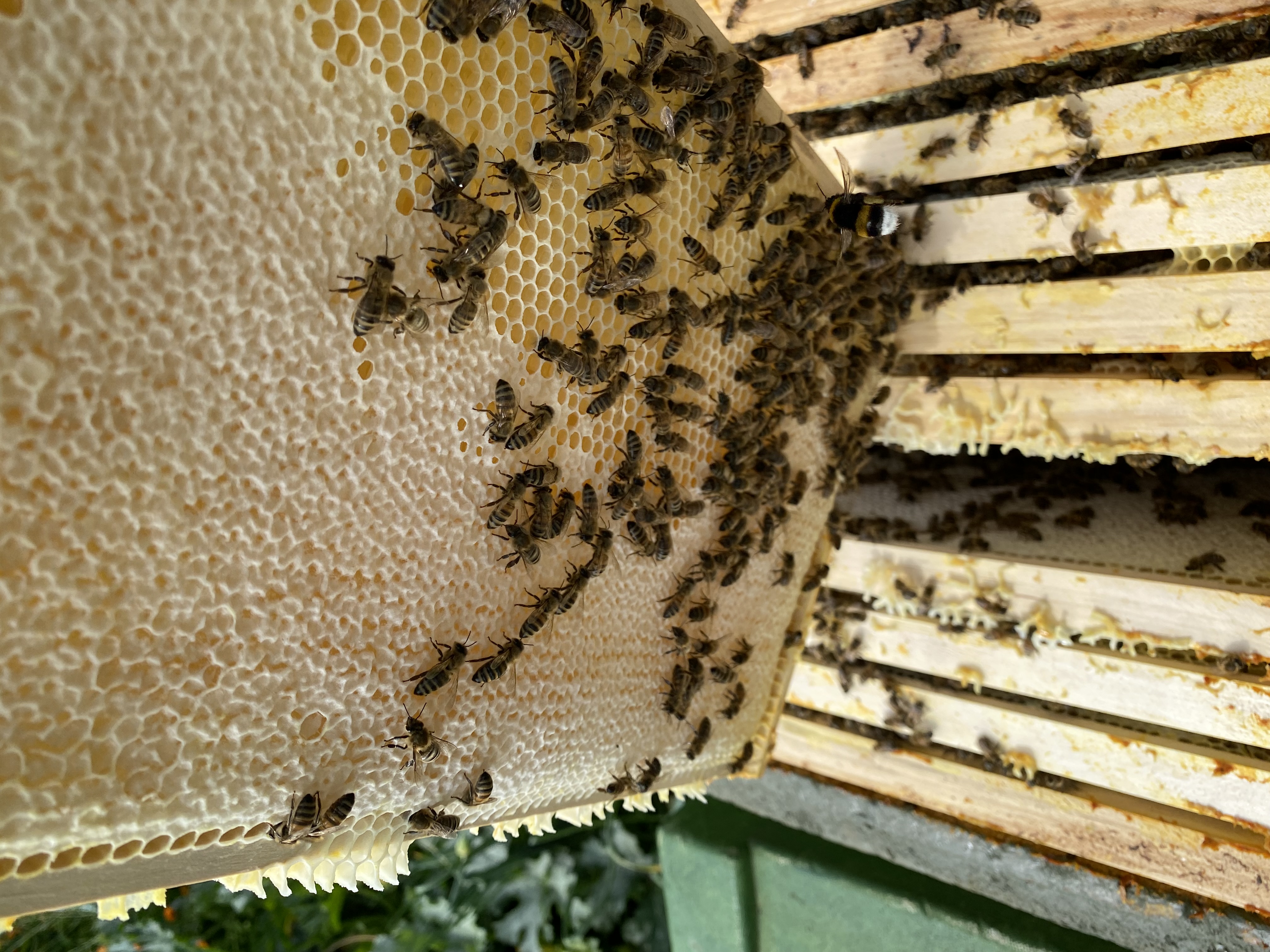
Ein Blick in unsere Imkerei – vom Bienenvolk bis zum Honigglas Im Honigraum sammeln unsere Bienen den Nektar heimischer Blüten, verarbeiten ihn zu Honig und lagern ihn in den Waben. Jede Honigwabe ist das Ergebnis unzähliger Blütenbesuche und der beeindruckenden Zusammenarbeit eines Bienenvolkes. Bei Hartzis Honig steht dahinter eine regionale Imkerei mit viel Handarbeit, Leidenschaft und Respekt vor der Natur. -
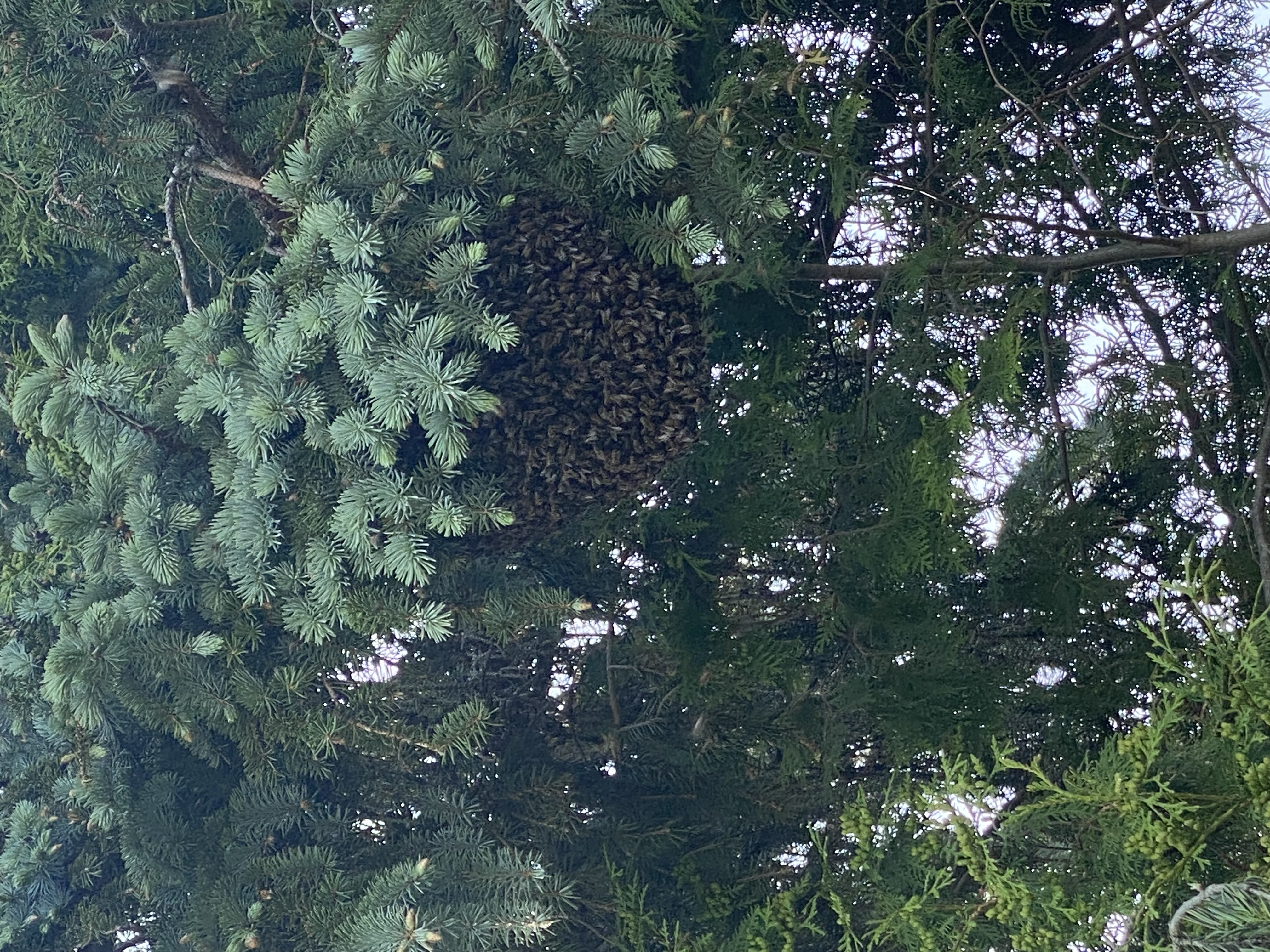
Ein Bienenschwarm – ein faszinierendes Naturschauspiel Ein Bienenschwarm gehört zu den beeindruckendsten Erlebnissen in der Imkerei. Wenn sich ein Teil eines Bienenvolkes auf den Weg macht, entsteht ein faszinierendes Schauspiel der Natur. Diesen Schwarm habe ich eingefangen und ihm damit ein neues Zuhause in meiner Imkerei gegeben. Für mich sind solche Momente ein besonderer Teil der Arbeit mit den Bienen – nah an der Natur und immer wieder spannend. -
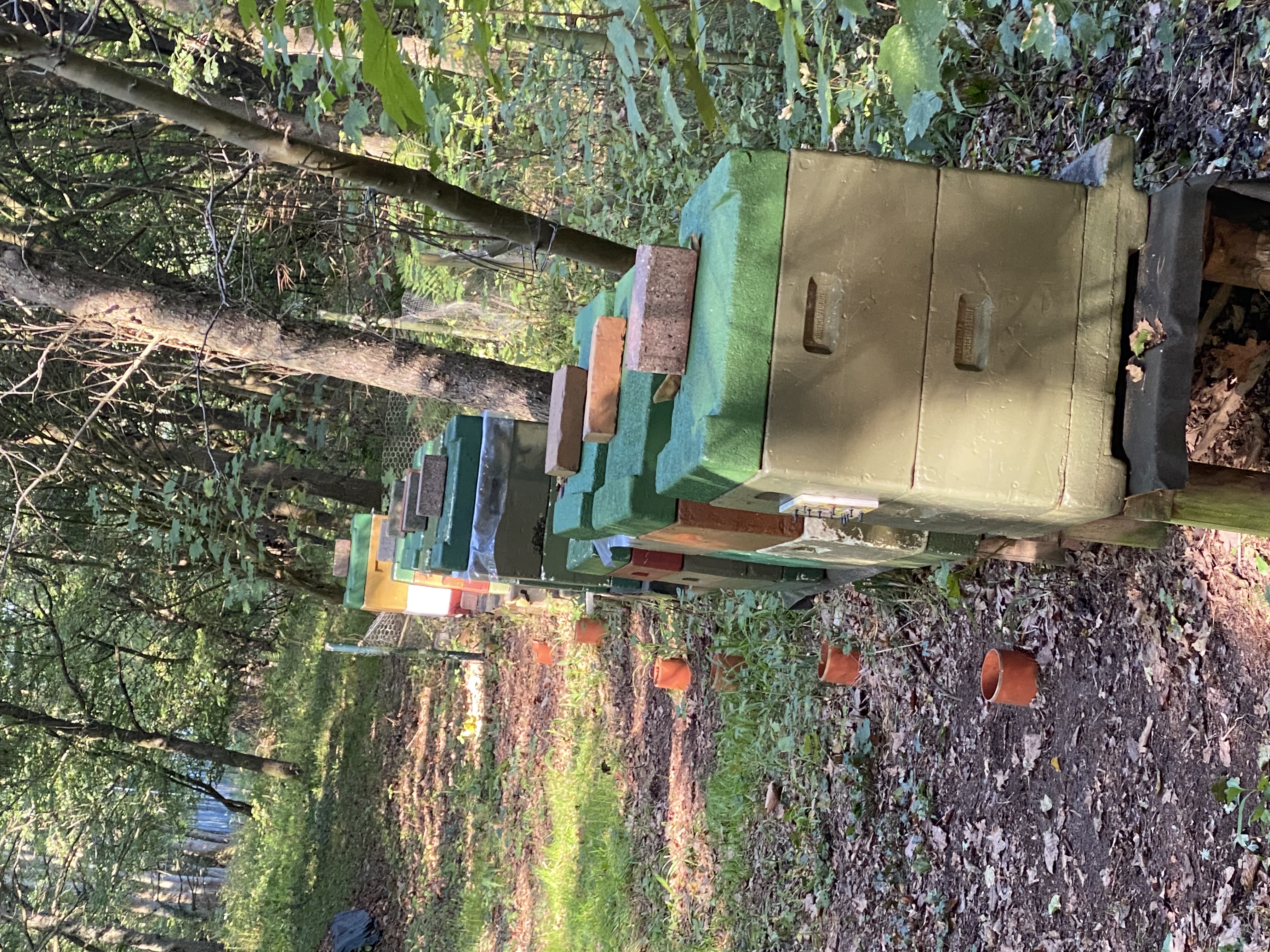
Ein Zuhause für unsere Bienen – unser Bienenstand in Waldhusen Dieses Foto entstand im Spätsommer, als der Herbst langsam Einzug hielt. In Waldhusen befindet sich einer unserer festen Bienenstandorte. Hier leben unsere Bienenvölker im Rhythmus der Natur und sammeln in der Umgebung Nektar und Pollen. Wir wandern nicht mit unseren Bienen. Unsere Völker bleiben in ihrer vertrauten Umgebung rund um Lübeck. So ist jeder Standort ein Stück Heimat und Teil unserer regionalen Imkerei. -
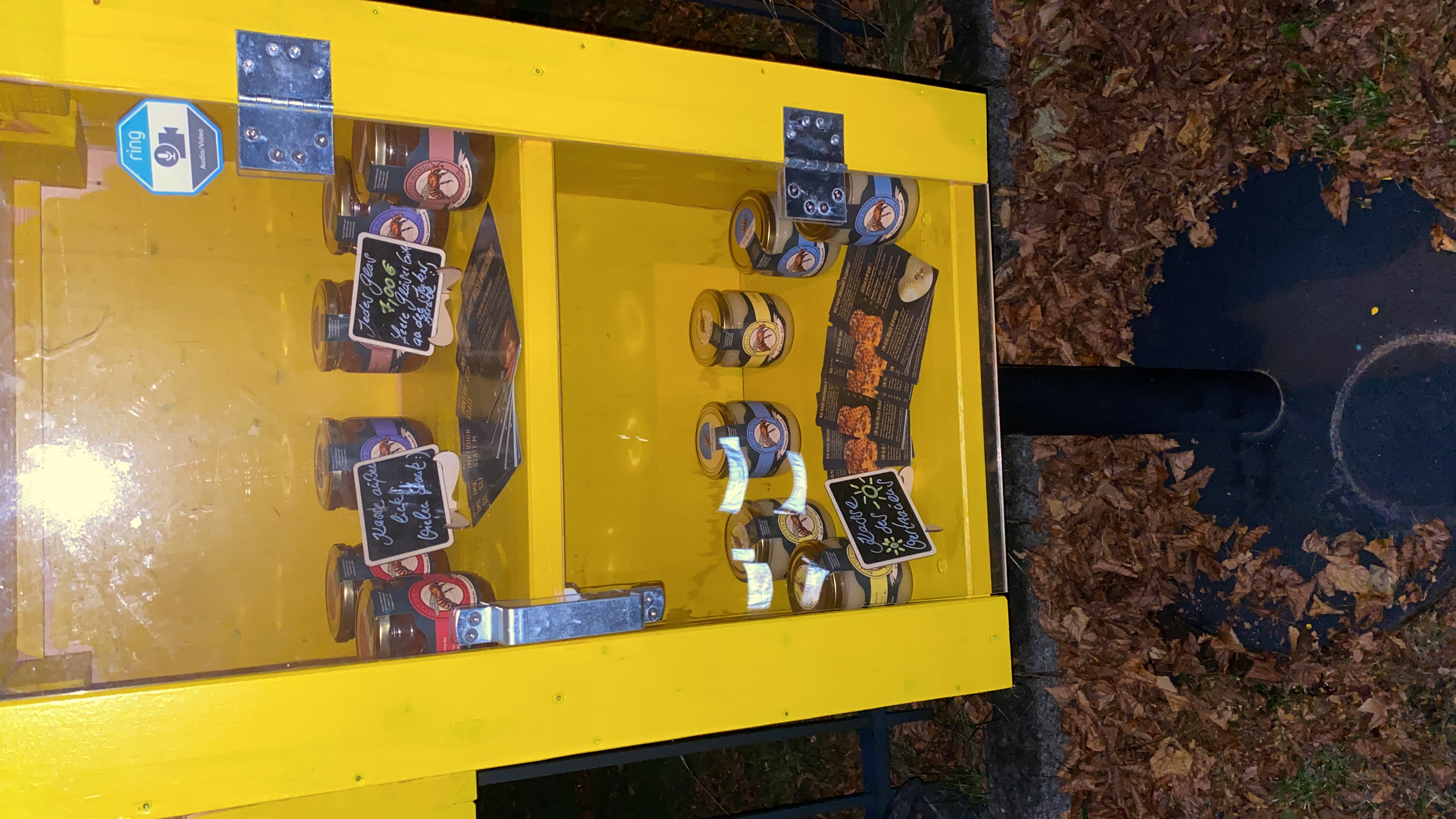
Regionaler Honig – direkt vor der Haustür Mit unseren Selbstbedienungs-Honigschränken machen wir regionalen Honig für jedermann unkompliziert zugänglich. Hier können unsere Kunden Hartzis Honig direkt vom Imker erwerben – ohne lange Wege und unabhängig von klassischen Ladenöffnungszeiten. Wir stehen für ehrliche Produkte aus eigener Imkerei, persönliche Verbundenheit mit unserer Region und die Wertschätzung regionaler Lebensmittel.